Every spring, homeowners face the same question as they prepare for another season of lawn maintenance: which mower deserves a spot in the garage? For decades, gas-powered mowers dominated backyards without serious competition, but battery-powered models have surged forward with impressive technological improvements that now challenge that dominance. The decision isn’t as straightforward as it once was. Can a battery mower handle thick, overgrown grass with the same authority as a gas engine? Will it last long enough to finish your entire yard on a single charge? What about the total cost of ownership over five or ten years, and how do environmental considerations factor into a responsible choice? This article delivers a comprehensive, data-driven comparison of battery and gas lawn mowers, examining power output, runtime, maintenance demands, and long-term value. Whether you manage a compact suburban plot or a sprawling rural property, the goal here is simple: equip you with the clarity needed to choose the mower that genuinely fits your lawn, your budget, and your lifestyle.
The Core Showdown: Battery-Powered vs. Gas-Powered Lawn Mowers
At their core, these two mower types differ in how they convert energy into cutting force. Gas mowers rely on internal combustion engines—typically 140cc to 190cc—that burn fuel to spin a crankshaft connected to the blade. Battery mowers use brushless electric motors powered by lithium-ion cells, delivering instant torque without the mechanical complexity of pistons and carburetors. This fundamental difference shapes every aspect of the ownership experience.
In terms of raw performance, gas engines still hold an edge in sustained power delivery through dense, wet, or overgrown grass. Their engines can push through resistance without the voltage drop that battery mowers sometimes experience under heavy load. On steep hills, gas mowers maintain consistent RPMs regardless of incline. However, modern battery mowers running on 56V to 80V platforms with 5Ah or higher batteries have closed this gap significantly for typical residential conditions, producing blade speeds that rival mid-range gas models during normal mowing.
The experiential differences are stark. Battery mowers operate at roughly 65 to 70 decibels—comparable to a normal conversation—while gas mowers roar at 90 decibels or more. Battery models produce zero direct emissions, eliminating exhaust fumes and reducing your carbon footprint with each mow. For neighborhoods with noise ordinances or families with young children, this advantage alone can be decisive.
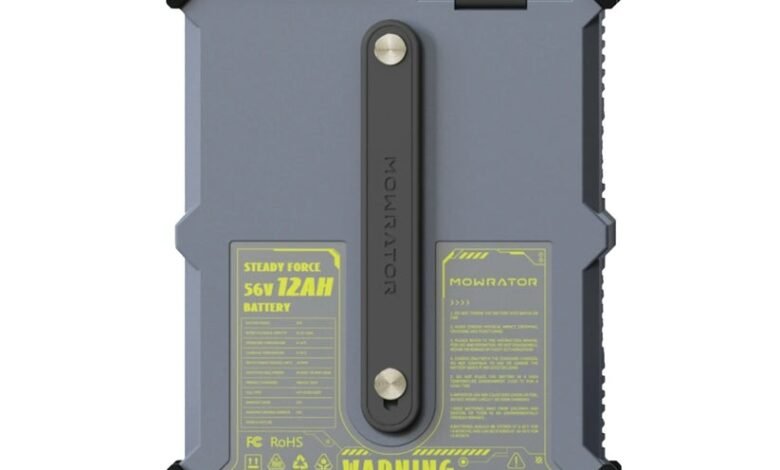
Runtime remains the battery mower’s primary constraint. Most units deliver 30 to 60 minutes of cutting time per charge, sufficient for lawns up to half an acre depending on grass conditions. Gas mowers, by contrast, run as long as you have fuel in the tank, making them the practical choice for properties exceeding that threshold. Long-term ownership costs favor battery models: no oil changes, air filter replacements, spark plug swaps, or carburetor cleanings. Electricity for charging costs a fraction of seasonal gasoline expenses. However, battery for lawn mower replacement every three to five years represents a notable expense that partially offsets those savings.
Matching the Mower to Your Lawn and Lifestyle
Choosing the right mower starts with one honest assessment: how much ground do you actually need to cover? Lawn size is the single most influential factor in this decision. If your property measures a quarter acre or less, a battery mower handles the job comfortably on a single charge, often with power to spare. Yards between a quarter and half an acre fall into a transitional zone where a high-capacity battery model (60V or above with dual batteries) can still manage, though you may occasionally need a second charge for particularly thick growth. Once you exceed half an acre, or if your terrain includes steep grades, dense weed patches, and irregular edges that slow progress, a gas mower’s unlimited runtime and brute-force consistency become genuinely difficult to replace.
Beyond acreage, consider what you value most during the mowing experience itself. If you mow early mornings or evenings to avoid heat, a battery mower’s quiet operation means you won’t disturb neighbors or sleeping family members. If you prefer minimal upkeep and dislike trips to the gas station for fuel and oil, the plug-in-and-forget simplicity of a battery platform is liberating. Conversely, if you need a mower that powers through any condition without worrying about charge levels—or if you already maintain other gas-powered outdoor equipment and are comfortable with engine care—a gas model fits naturally into your routine.
Storage matters too. Gas mowers require proper fuel stabilization for off-season storage and should be kept away from living spaces due to fume risks. Battery mowers need a dry, temperature-controlled area for their batteries, since extreme cold or heat degrades lithium-ion cells faster. To simplify your decision, run through these questions: Is my lawn under half an acre? Do I prioritize quiet, low-maintenance operation? Am I comfortable replacing a battery pack every few years? If you answered yes to all three, battery is your match. If your lawn is large, hilly, or heavily wooded with demanding conditions, gas remains the stronger workhorse.
Beyond the Mower: Essential Lawn Mower Attachments & Gardening Tools
Once you’ve settled on the right mower, the next step is making it work harder for you. A mower on its own cuts grass, but paired with the right lawn mower attachments, it becomes a versatile yard management system that handles tasks you’d otherwise do by hand or with separate equipment. Think of attachments as force multipliers—they extend what your mower can accomplish in a single session without requiring additional machines cluttering your garage.
Mulching kits rank among the most popular upgrades, converting your mower into a nutrient-recycling machine that finely chops clippings and deposits them back into the turf. Baggers serve the opposite purpose, collecting clippings cleanly for composting or disposal when you want a manicured finish. Tow-behind spreaders and aerators turn your riding mower into a lawn health tool, distributing fertilizer evenly or breaking up compacted soil during seasonal treatments.
For anyone tired of stopping mid-mow to empty a heavy grass catcher, an auto dumping bag is a genuine productivity upgrade. It lets you release collected clippings with a simple lever or mechanism while still seated, eliminating the repetitive bending and lifting that turns a routine mow into a physical chore. The hands-free operation keeps your momentum going, especially on larger properties where frequent stops add up quickly.
If your yard work extends beyond cutting grass—hauling mulch, moving bags of soil, transporting firewood, or clearing brush—a trailer hitch kit from MOWRATOR transforms a standard riding mower into a light-duty hauler. It provides a universal connection point for carts, trailers, and other tow-behind gardening tools, turning trips that would require a wheelbarrow into effortless towed loads. Before purchasing any attachment, always verify compatibility with your specific mower’s brand, model, and engine capacity, since improper fitment can compromise both performance and safety.
Practical Solutions: How to Select and Use Your Accessories Effectively
Guidance on Selecting the Right Lawn Mower Accessories
Choosing the right attachments doesn’t need to be overwhelming if you follow a deliberate process. Start by identifying the tasks that consume the most time or energy during your yard work routine. If you spend ten minutes every session emptying a grass catcher, an auto dumping bag addresses that specific pain point. If you regularly haul mulch, soil, or debris across your property with a wheelbarrow, a MOWRATOR trailer hitch kit eliminates those exhausting trips immediately.
Once you’ve pinpointed your needs, verify compatibility before purchasing anything. Check your mower’s make, model, deck size, and engine capacity against the attachment’s specifications—manufacturers typically publish fitment guides on their websites. A hitch kit designed for one brand’s frame geometry may not bolt cleanly onto another without modification, and forcing incompatible parts risks structural damage or unsafe operation. Next, evaluate build quality. Steel components outlast plastic in high-stress applications like towing and hauling, while UV-resistant polymer bags hold up better across seasons than standard fabric. Always compare warranty terms; a longer coverage period signals the manufacturer’s confidence in durability. Finally, spend time reading user reviews, but focus specifically on comments about installation difficulty and long-term wear rather than initial impressions. Owners who’ve used an attachment for a full season or more offer the most reliable perspective on whether it holds up under real conditions.
How to Use Lawn Mower Attachments Effectively and Safely
Before every use, perform a quick pre-operation inspection. Confirm that all mounting bolts are tight, pins are fully seated, and no components have shifted since last use. Walk the area you plan to mow or traverse, removing rocks, branches, and toys that could jam mechanisms or become dangerous projectiles. When towing with a hitch kit, reduce your speed to a comfortable pace—rushing increases the risk of trailer sway, especially on uneven ground or turns. Keep loads balanced and avoid exceeding the recommended towing weight, since excess strain accelerates wear on both the hitch and your mower’s drivetrain.
When using an auto dumping bag, distribute clippings evenly as the bag fills rather than letting one side become disproportionately heavy, which can affect mower handling. Familiarize yourself with the release mechanism before you start mowing so the motion becomes instinctive mid-session. For bagger attachments, set your cutting height slightly higher than usual to reduce the volume of clippings per pass and prevent clogging. One universal rule applies to every attachment: always disengage the blades and turn off the mower completely before attaching, detaching, or adjusting any accessory. On slopes, remember that added weight from a loaded bag or trailer shifts your center of gravity, so mow across inclines rather than straight up and down. After each season, clean attachments thoroughly, lubricate moving parts, and store them in a dry location to prevent rust and extend their working life.
Building Your Ideal Mowing Setup: Power Source, Accessories, and Long-Term Value
The battery versus gas debate doesn’t have a universal winner—it has a personal one. Gas mowers deliver relentless power, unlimited runtime, and proven reliability on large, demanding properties where stopping to recharge simply isn’t practical. Battery mowers counter with whisper-quiet operation, zero emissions, negligible maintenance, and enough capability to handle most residential lawns under half an acre without breaking a sweat. The right choice hinges on three factors: the size and complexity of your yard, how much you value convenience and environmental responsibility, and your willingness to manage either fuel systems or battery lifecycles over time.
Beyond the mower itself, investing in the right lawn mower attachments dramatically extends what a single machine can accomplish. An auto dumping bag eliminates the tedious stop-and-empty cycle that slows every mowing session, while a trailer hitch kit turns your riding mower into a hauling workhorse capable of moving soil, mulch, and debris without a separate vehicle. These accessories don’t just save time—they reduce physical strain and make the entire process more enjoyable. Use the comparisons and frameworks in this article to build a mowing setup tailored precisely to your property and priorities, and transform lawn care from a weekend obligation into a task you handle efficiently and on your own terms.