Some sports require a considerable investment of time before a beginner feels comfortable participating. Pickleball has developed a reputation for offering a more approachable introduction. New players can learn the basic concept relatively quickly, start rallying, and gradually discover the strategy hidden beneath the game’s seemingly simple appearance.
That accessibility has helped pickleball attract people with very different athletic backgrounds. Tennis players may recognize certain movements immediately, while people with little racquet-sport experience can still begin learning without needing years of technical training. The result is a sport that can be recreational and social at one level while becoming fast, strategic, and highly competitive as skills improve.
Simple Rules Make Starting Less Intimidating
One reason pickleball appeals to newcomers is that the basic objective is easy to understand. Players hit a perforated ball over a net and attempt to construct points while following rules related to serving, scoring, boundaries, and the non-volley zone.
Knowing the rules and playing them effectively are two different things. Beginners often discover that seemingly straightforward decisions, such as where to stand or when to move forward, become more complicated once rallies begin.
This gradual learning curve is part of the appeal. A new player can enjoy a casual game while still having plenty of room to improve. More experienced participants can work on shot placement, positioning, consistency, anticipation, and communication.
Because improvement can happen incrementally, players often notice progress without needing to completely rebuild their game. Learning to serve consistently may be one milestone, followed by better returns, improved positioning, and eventually more deliberate shot selection.
Equipment Can Match Different Playing Styles
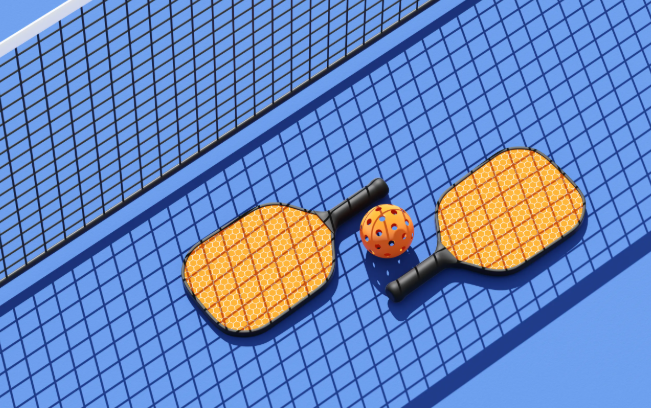
Getting started does not require an enormous collection of equipment. Players generally need appropriate court shoes, balls, and pickleball paddles that comply with the rules of the organization or facility where they intend to play. From there, preferences tend to become more specific as players gain experience.
Beginners may initially focus on finding equipment that feels comfortable and manageable. As they develop, they may start noticing differences in weight, grip size, shape, surface characteristics, and overall feel.
No single paddle characteristic is ideal for every player. Someone who values maneuverability near the net may have different preferences from a player who wants a particular feel on drives from deeper in the court. Personal strength, technique, experience, and comfort can all influence equipment selection.
Trying different equipment can help players understand these preferences. Friends, clubs, instructional programs, or retailers may provide opportunities to experience several options before committing to a purchase.
Equipment matters, but technique remains central. A player who consistently controls placement and makes smart decisions can be effective without chasing every new product release.
Strategy Becomes More Important With Experience
Beginners often focus primarily on getting the ball over the net. Once that becomes easier, the game begins to change.
Instead of simply reacting, players start thinking about where their opponents are positioned and where open space may develop. They learn when to slow down a rally, when to attack an appropriate ball, and how to move with a partner during doubles.
Patience can be particularly valuable. Trying to end every rally with a powerful shot often creates unnecessary errors. Controlled shots can force opponents into uncomfortable positions and create better opportunities later in the point.
Consistency is similarly important. Keeping the ball in play places pressure on the opposing team to continue executing. At recreational levels especially, avoiding unforced errors can be more valuable than attempting difficult winners.
Players also learn that positioning affects almost every shot. Being a few feet out of position can turn a manageable ball into a difficult one. Understanding where to move after serving, returning, or hitting a particular shot becomes part of developing court awareness.
Doubles Adds a Strong Social Element
Although pickleball can be played as singles, doubles is extremely popular in recreational settings. Having four people on a relatively compact court naturally creates opportunities for conversation and social interaction.
Community recreation centers, clubs, parks, retirement communities, gyms, and private facilities may organize open play, leagues, clinics, or tournaments. These formats allow players to meet others at similar skill levels and participate regularly without always arranging a private group.
The social atmosphere can make exercise feel less like a formal workout. Players are concentrating on the ball, talking with partners, keeping score, and competing rather than watching the minutes on a treadmill.
Doubles also teaches cooperation. Partners need to communicate about balls near the middle of the court, move together, and adjust to each other’s strengths and tendencies. Two individually skilled players will not necessarily function effectively as a team if they leave large openings or hesitate over who should take a shot.
Good communication can be as simple as calling a ball clearly and encouraging a partner after an error. Recreational games are more enjoyable when competition remains respectful.
Practice Does Not Have to Mean Playing Matches
Games are fun, but they are not always the fastest way to improve a specific skill. During a match, players have limited control over which shots they receive. Someone trying to improve a particular technique may only encounter a few opportunities to practice it.
Focused drills provide repetition. Players can work on serves, returns, controlled exchanges, volleys, movement, and other skills without worrying about the score.
Even short practice sessions can be productive when they have a clear purpose. Twenty minutes devoted to consistent serving may be more useful than playing several games while repeating the same mistakes.
Lessons and clinics can provide additional structure. A qualified instructor can identify technical issues that players may not notice themselves and suggest drills for improving them.
Video can also be informative. Watching a recording of a practice session may reveal positioning habits, unnecessary movement, or preparation issues that are difficult to recognize while playing.
See Also: How Health Insurance Needs Differ for Salaried and Self-Employed Individuals
Footwork and Fitness Still Matter
The court may be smaller than a tennis court, but pickleball still requires movement. Players accelerate, stop, change direction, reach for shots, and repeat those actions throughout a session.
Appropriate footwear is important because running shoes designed primarily for forward movement may not provide the same characteristics as shoes intended for court movement. Players should choose footwear suited to the surface and their individual needs.
Warming up before playing can help the body transition into activity. Light movement and gradual practice strokes give players time to become comfortable before rallies become more demanding.
Hydration and breaks should not be ignored, particularly during warm weather or extended sessions. The social nature of pickleball can make it easy to play game after game without realizing how long someone has been active.
Players should also respect their own physical limits. Improvement does not require playing through significant pain or exhaustion. Rest and recovery are part of maintaining any sustainable recreational activity.
The Sport Can Grow With the Player
Pickleball’s lasting appeal comes partly from the fact that it can mean different things to different people. Some participants want a social activity that gets them moving a few times each week. Others enjoy leagues, tournaments, structured practice, and the challenge of steadily improving their competitive skills.
Beginners can start with the fundamentals and add complexity as their confidence grows. There is always another aspect to develop, whether it is positioning, consistency, communication, shot selection, or physical conditioning.
Equipment choices may evolve along the way, but they remain only one part of the experience. Practice, patience, movement, and decision-making ultimately determine how effectively players use what they bring to the court.
Most importantly, the sport gives people a reason to stay active and interact with others. A player can arrive expecting a casual hour of exercise and leave thinking about the one rally they almost won or the new skill they want to practice next time. That combination of accessibility, competition, strategy, and community helps explain why so many newcomers decide to keep coming back.