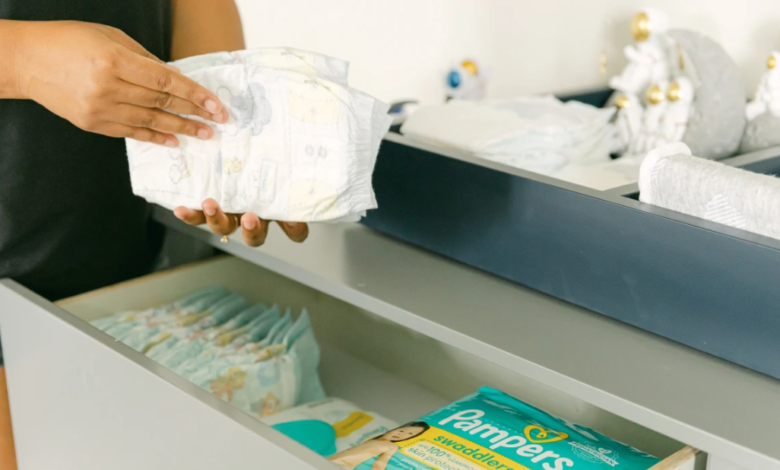
Australian families navigating bulk nappies purchases face a marketplace where shelf price rarely reflects genuine value. Recent consumer analysis reveals that traditional shopping approaches often result in parents paying substantially more per unit than necessary.
Australian families spend between $2,500 and $4,000 per child on disposable nappies from birth to toilet training. These figures make informed purchasing decisions increasingly critical during periods of economic pressure. The solution lies in understanding carton count methodology and applying consistent mathematical comparison.
The Shelf Price Problem in Australian Retail
Major supermarket chains stock bulk nappy cartons that create visual impressions of value through packaging design. Substantial variance exists between shelf presentation and actual unit economics.
Industry data shows that Joonya bulk cartons containing six bags retail for approximately $105, delivering roughly 19% savings compared to individual bag purchases. This represents genuine bulk value. Numerous products marketed as bulk offerings provide minimal per-unit savings despite occupying significant shelf space.
Promotional cycles compound the complexity. Sale pricing may reduce an overpriced product to market average rather than genuinely competitive rates. Without calculating cost per individual nappy, consumers lack the data necessary for informed decisions.
Retail packaging strategies deliberately create abundance perception. Carton dimensions and promotional language work collectively to influence purchasing behaviour independent of actual value metrics. Industry suppliers likeComplete Wholesale Suppliers observe these patterns regularly in childcare and retail sectors. Institutional buyers demand transparent unit pricing that individual consumers often overlook.
See also: Tailoring Your Space: The Art of Home Customization
Establishing a Consistent Valuation Framework
The fundamental calculation requires dividing total carton price by total nappy count. This metric provides comparable data across all brands and retailers.
A carton priced at $29.99 containing 100 nappies equals $0.30 per nappy. A larger carton at $52.00 containing 192 nappies calculates to $0.27 per nappy. Despite the higher absolute price, the second option delivers superior unit economics.
This methodology applies universally regardless of brand positioning or marketing claims. Mobile calculator applications make the computation immediate. The process transforms bulk nappy comparison from guesswork into evidence-based purchasing.
Understanding Carton Configuration Standards
Australian bulk nappies arrive in various internal configurations that affect both storage and usage patterns. Products labelled “ctn 216” contain 216 nappies divided into four smaller packs of 54 nappies each.
Carton descriptions using notation like “2 × 96 pack” indicate internal structure. The multiplication reveals total count. Two packs of 96 equals 192 total units. Four packs of 74 equals 296 total units. Internal pack divisions allow partial carton opening while maintaining freshness for remaining inventory.
Brand terminology including “super jumbo pack” and “family value box” lacks standardised meaning. Promotional materials frequently reference “flash sale carton deals” claiming to offer “best cost per nappy”. Verification requires independent calculation rather than marketing acceptance.
Comparative Analysis: Australian Market Pricing DataBudget segment findings:
ALDI Mamia demonstrates the lowest per-unit costs at $0.15 to $0.23 per nappy. Coles CUB and Woolworths Little Ones occupy similar pricing bands between $0.20 and $0.30 per nappy. Supermarket private label products consistently deliver minimal unit costs across the Australian retail landscape.
Mid-tier segment analysis:
Huggies ranges from $0.35 to $0.65 per nappy depending on size classification. BabyLove and comparable national brands demonstrate similar pricing structures. Rascal + Friends positions as affordable premium.
Premium and eco-focused segment data:
Joonya bulk cartons calculate to approximately $0.55 to $0.70 per nappy. Ecoriginals and Tooshies range from $0.75 to exceeding $1.00 per nappy. Comfy Koalas and Lovekins occupy premium pricing at $0.50 to $0.80 per nappy.
Specialty carton configurations including Merries flash sale offerings contain 192 to 296 nappies per carton. These provide competitive unit pricing within the premium import category.
The pricing differential reaches over 600% between budget and premium endpoints. Quality variation exists but does not scale proportionally with price. Independent testing by CHOICE found Coles CUB scored as the top-performing newborn nappy. This budget option surpassed significantly more expensive alternatives on leakage and rewet metrics.
Strategic Bulk Purchasing Considerations
Bulk acquisition generates savings only when comparing equivalent unit value. Large cartons of expensive brands may exceed the per-unit cost of smaller packages from budget brands.
Genuine bulk savings occur when purchasing increased quantities of products already identified as offering competitive unit economics. Bulk carton savings typically range from 15 to 20 percent compared to single pack purchases of identical products.
Storage capacity represents a practical constraint for substantial bulk purchases. Cartons containing 200-plus nappies require significant storage allocation. Residential situations with limited space necessitate balancing unit economics against practical storage availability.
Size transitions create inventory risk. Infant growth patterns vary considerably. Extended advance purchasing potentially wastes resources. Purchasing excessive quantities of a single size risks unusable inventory if growth acceleration occurs.
Optimal methodology involves initial small-quantity testing across multiple brands within target price ranges. After identifying products meeting performance requirements, bulk purchasing becomes financially rational. Facilities managing childcare operations regularly employ this testing and bulk procurement approach. Proper nappy change station setups for childcare centres demonstrate institutional-level attention to both hygiene standards and economic efficiency.
Subscription Service Economic Analysis
Nappy subscription services commence at approximately $36 per week including wipes. These platforms manage logistics and provide scheduled deliveries. The convenience appeal benefits time-constrained households.
Financial comparison reveals subscription services typically feature premium or mid-tier brands. Per-unit costs generally exceed self-directed budget brand bulk purchasing. The convenience premium reflects logistical handling and predictable delivery scheduling.
Service flexibility varies substantially by provider. Cancellation policies and minimum commitment periods require careful evaluation before subscription initiation. Families prioritising convenience and accepting premium pricing find value in subscriptions. Households focused on minimum cost achievement achieve superior unit economics through self-directed bulk purchasing from budget segments.
Independent Quality Assessment Data
Price alone provides incomplete purchasing guidance. Products demonstrating frequent leakage generate additional costs through increased changing frequency and laundry requirements.
CHOICE Australia has conducted independent testing across 84 nappy products spanning newborn through junior sizes. Testing evaluates absorbency and leakage performance. Results demonstrate that price and performance lack consistent correlation. Budget brands frequently achieve performance parity compared to premium alternatives.
CHOICE testing identified Coles CUB as the top-scoring newborn nappy with perfect leakage scores and 96% rewet performance. This performance exceeded Huggies despite representing one of the lowest-cost options available.
These findings do not suggest universal budget brand superiority. Specific infant requirements may necessitate particular features available in higher-priced options. Dermatological sensitivities may require premium material composition. High-volume wetters may benefit from advanced absorbency technology.
Evidence-Based Purchasing Methodology
1. Primary calculation
Compute cost per nappy for all considered options. Disregard shelf tags and promotional claims. Conduct independent mathematical verification.
2. Configuration verification
Confirm total nappy count and internal package structure. Compare actual unit quantities rather than carton counts or physical dimensions.
3. Size appropriateness
Match sizing to current infant weight parameters. Newborns require 8 to 12 nappies daily while infants require 6 to 8 daily. Toddlers require 4 to 6 daily. Avoid excessive purchasing of sizes approaching obsolescence.
4. Multi-channel comparison
Evaluate pricing across supermarket chains and online channels. Woolworths and Coles maintain different promotional cycles. Online warehouse suppliers frequently undercut traditional retail on bulk quantities. Complete Wholesale Suppliers and similar institutional vendors sometimes offer retail sales at competitive bulk rates.
5. Timing optimisation
Major sales periods generate legitimate discounts. End of financial year events and Black Friday promotions provide opportunities. However, consistent calculation remains essential. Promotional percentages applied to expensive brands may still exceed full-price budget alternatives.
Alternative Approaches and Hybrid Strategies
Cloth nappies require $720 to $875 as one-time expenditure compared to $2,500 to $4,000 for disposables across equivalent periods. This represents minimum savings of $1,600 per child.
Initial outlay concentration creates psychological resistance despite superior long-term economics. Immediate $700 expenditure generates greater purchasing hesitation than $3,000 distributed across incremental retail purchases.
Hybrid methodologies balance economics with practical considerations. Cloth nappies during daytime home use combine with disposable use overnight. This reduces disposable consumption by 60 to 70 percent while maintaining convenience for specific situations.
Strategic segmentation optimises expenditure within disposable-only approaches. Budget brands for frequent daytime changes combine with premium overnight products for superior extended-duration absorbency. This matches spending to functional requirements.
Establishing Informed Purchasing Practices
The differential between systematic bulk purchasing and reactive shopping frequently exceeds $1,500 across standard nappy-wearing periods. Cost-per-unit calculation provides transparent comparative data transcending marketing strategies. This methodology converts complex retail presentations into straightforward numerical comparison.
Lower per-unit cost combined with quality verification through independent testing establishes optimal purchasing decisions. Australian families benefit from systematic analytical frameworks rather than reactive shopping behaviour. Mathematical comparison and independent quality data combine to generate substantial savings across extended childcare periods.
Economic pressures continue affecting household budgets nationwide. Evidence-based purchasing methodologies deliver measurable financial benefit while maintaining product quality and infant care standards. The simple act of dividing price by quantity transforms nappy purchasing from guesswork into informed financial decision-making.