Picture this: you’ve spent hours perfecting a logo design or color-grading a short film, only to discover that what looked stunning on your monitor appears washed out or wildly off-tone on every other screen. For photographers, video editors, and graphic designers, this frustrating gap between intent and output is an all-too-familiar reality — one rooted in the limitations of conventional display technology.
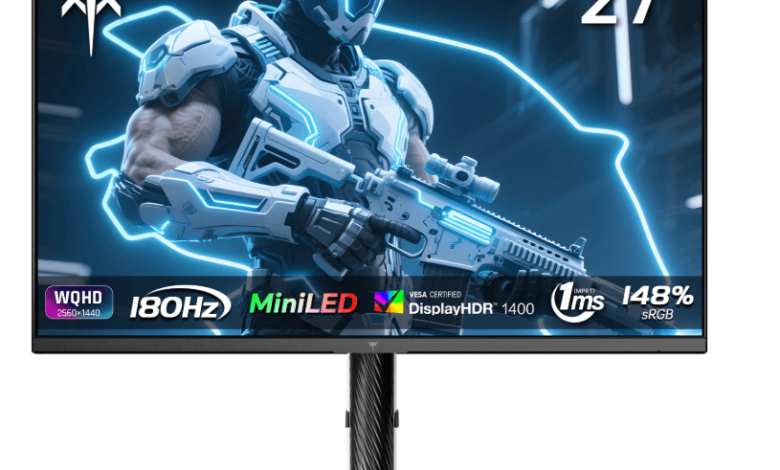
Mini LED monitors are changing that story. By packing thousands of microscopic LEDs into a precision backlighting system, these displays deliver a level of brightness control, color fidelity, and HDR performance that traditional panels simply cannot match. The result is a monitor that shows your work closer to how it was meant to be seen — and how your audience will ultimately experience it.
This article explores how Mini LED technology works, why factory-calibrated accuracy matters for creative professionals, and how superior contrast ratios translate into more impactful visual output. More importantly, it offers practical guidance on integrating these monitors into your existing workflow. Whether you’re a seasoned creative or just building your studio setup, understanding what Mini LED brings to the table could fundamentally elevate the quality and efficiency of every project you take on.
The Evolution of Display Technology: Why Mini LED Monitors Matter
Display technology has come a long way from the bulky CRT monitors of the early computing era. The shift to LCD panels brought thinner designs and lower power consumption, but these displays relied on a single backlight array — a blunt instrument that made precise brightness control nearly impossible. Edge-lit and full-array local dimming (FALD) LED monitors improved things somewhat, grouping LEDs into dimming zones to better manage light output. Yet the zone counts remained low, often numbering in the dozens, which meant light still bled into areas that should have stayed dark.
Mini LED technology represents a genuine leap forward in this progression. Instead of a few dozen dimming zones, a Mini LED panel can contain thousands of microscopic LEDs — each measuring less than 0.2mm — organized into hundreds or even thousands of independently controlled zones. This granular control allows the display to brighten specific regions for specular highlights while simultaneously keeping adjacent dark areas truly dim. The practical outcome is a dramatic reduction in the “blooming” effect, where bright objects appear to glow or bleed into surrounding darkness — a persistent flaw in earlier backlighting systems.
For creative professionals, this matters enormously. A retoucher examining skin tones against a dark background, or a colorist evaluating shadow detail in a night scene, needs a display that renders each element honestly without interference from neighboring zones. Mini LED’s precision backlighting creates the visual environment where that kind of critical evaluation becomes genuinely reliable, forming the technical foundation for everything that follows.
Unlocking Precision: Mini LED and Factory-Calibrated Displays for Color Accuracy
Color accuracy isn’t a luxury for creative professionals — it’s the foundation of trustworthy work. When your monitor misrepresents hues, every decision downstream becomes suspect. Mini LED technology, combined with factory calibration, addresses this challenge at its root by providing a display environment where what you see genuinely reflects what you’ve created.
The Critical Need for Color Accuracy in Creative Projects
Consider a brand designer who carefully constructs a visual identity around a specific shade of teal, only to have the client reject the printed materials because the colors look nothing like what was approved on screen. Or a video editor who delivers a film with warm, golden tones, unaware that their monitor was skewing the entire grade toward yellow. These aren’t hypothetical disasters — they’re routine consequences of working on poorly calibrated displays. Inaccurate color reproduction forces costly revision cycles, erodes client confidence, and introduces inconsistency across deliverables. In fast-paced production environments, where time directly translates to revenue, these inefficiencies compound quickly.
How Factory-Calibration in Mini LED Monitors Delivers Consistency
Factory-calibrated displays are individually measured and adjusted at the manufacturing stage, ensuring each unit meets verified color accuracy standards before it reaches your desk. Unlike generic monitors that ship with default settings optimized for showroom brightness rather than accuracy, factory-calibrated Mini LED monitors come with a calibration report confirming their performance against industry color spaces. Manufacturers like KTC have embraced this approach in their Mini LED lineup, shipping displays with documented Delta E values that give creative professionals a verified starting point rather than an unchecked assumption.
Mini LED’s precise zone control plays a direct role here. Consistent, uniform backlighting — free from the hotspots and brightness falloff common in edge-lit panels — gives calibration engineers a stable foundation to work from. The result is tighter adherence to standards like sRGB (essential for web and UI work), Adobe RGB (critical for print production), and DCI-P3 (the benchmark for cinematic and streaming content).
To verify your monitor’s calibration out of the box, start by locating the included calibration report and cross-referencing the Delta E values — a Delta E below 2 is generally considered imperceptible to the human eye. Then load your color-managed application, such as Adobe Photoshop or Premiere Pro, and confirm that the software’s color settings match the monitor’s active color profile. This simple alignment step ensures the display’s factory accuracy translates directly into your creative output.
Bringing Images to Life: HDR Performance and Contrast Ratio in Mini LED Monitors
Beyond color accuracy, creative professionals increasingly demand displays that can render the full emotional and visual impact of their work — from the blinding glare of a sun-drenched landscape to the subtle gradations of shadow in a dimly lit portrait. This is where HDR performance and contrast ratio become decisive factors, and where Mini LED technology demonstrates some of its most compelling advantages.
Understanding HDR and Its Impact on Creative Content
High Dynamic Range, or HDR, refers to a display’s ability to simultaneously reproduce a wide range of luminance levels — from deep, detailed blacks to intensely bright highlights — within a single image. For viewers, this translates to visuals that feel closer to real-world perception. For creators, it means the editing environment must faithfully represent that expanded range during production. A video editor grading an outdoor scene needs to see how the sky’s highlights interact with the shadowed foreground in real time. A photographer retouching a high-contrast portrait must evaluate whether highlight detail is preserved or clipped. Without genuine HDR capability in the monitor itself, these judgments are guesswork — and the final output suffers accordingly on HDR-capable televisions, cinema screens, and streaming platforms that have made HDR the expected standard.
The Role of High Contrast Ratio in Mini LED Technology
Contrast ratio — the difference between a display’s brightest white and its darkest black — is the engine behind convincing HDR. Traditional full-array LED monitors, even with local dimming, typically manage a few hundred dimming zones at best. When a bright element appears near a dark region, the entire zone brightens, washing out nearby shadows. Mini LED’s thousands of independently controlled zones change this dynamic entirely. Each zone can be tuned with surgical precision, allowing a single frame to contain both a luminous specular highlight and a genuinely dark shadow within millimeters of each other on screen.
The practical result is contrast ratios that can reach 1,000,000:1 in peak conditions — figures that standard LED panels cannot approach and that even many OLED monitors struggle to match at high brightness levels. For a colorist evaluating a night scene or a motion graphics artist compositing a neon sign against a dark cityscape, this precision means the monitor is showing exactly what the final audience will see on a high-end HDR display. The gap between creative intent and delivered output narrows significantly, reducing surprise revisions and increasing confidence in every decision made during the editing process.
Transforming Your Workflow: Practical Steps to Leverage Mini LED Monitors
Setting Up Your Mini LED Monitor for Optimal Creative Output
Getting the most from a Mini LED monitor starts before you open a single creative application. Begin by connecting your workstation using a DisplayPort or HDMI 2.1 cable — both support the high bandwidth needed for 4K HDR signals. Once connected, navigate to the monitor’s on-screen display and select the color mode that matches your primary work: sRGB for web and UI design, Adobe RGB for print production, or DCI-P3 for video and cinematic work. Set brightness to around 120 nits for standard editing environments, reserving the monitor’s peak HDR brightness for final output previews. Disable any dynamic contrast or sharpness enhancement features, as these override the factory calibration and introduce artificial processing. In Adobe Photoshop or Premiere Pro, go to Edit > Color Settings and assign the color profile that matches your selected monitor mode — this ensures the software interprets color data consistently with what the display is rendering.
Ongoing Maintenance and Best Practices for Long-Term Performance
Factory calibration doesn’t last forever. Schedule a recalibration every three to six months using a hardware colorimeter like the X-Rite i1Display or Datacolor Spyder, which measures actual screen output and generates an updated ICC profile. Control ambient lighting by positioning the monitor away from direct sunlight and using a monitor hood to eliminate reflections that distort perceived contrast. Check the manufacturer’s website quarterly for firmware updates, which often refine local dimming algorithms and HDR tone mapping. Unlike OLED panels, Mini LED displays carry minimal burn-in risk, but enabling a screen saver for idle periods remains a sensible habit. These consistent routines preserve the color accuracy and HDR performance that make Mini LED monitors genuinely transformative tools rather than one-time investments.
Making the Choice: Mini LED vs. Other Display Technologies for Creators
Comparative Analysis: Mini LED, OLED, and Standard LED
Choosing the right display technology means weighing real trade-offs against your specific creative demands. OLED monitors offer pixel-level dimming and near-perfect blacks, making them visually stunning for dark-room viewing. However, they carry a genuine burn-in risk — a serious concern for creators who keep static interface elements like toolbars and palettes on screen for hours daily. Their peak brightness also trails behind Mini LED, which can be a meaningful limitation when evaluating HDR highlights in brightly lit studio environments. Standard LED monitors, meanwhile, remain the most affordable entry point but fall short on contrast precision and HDR authenticity, making them unreliable for color-critical work. Mini LED sits in a compelling middle ground: it delivers contrast performance that approaches OLED territory, sustains higher peak brightness, and carries no meaningful burn-in risk — a combination that suits the demanding, varied conditions of professional creative work.
Cost Considerations and Return on Investment for Professionals
Mini LED monitors command a higher upfront cost than standard LED panels, but the return on that investment becomes clear quickly in professional contexts. Fewer client revision cycles, more consistent color across deliverables, and greater confidence during final output review all translate directly into saved time — and time, for freelancers and studio teams alike, is billable. The upgrade makes the most financial sense for photographers handling print production, video editors delivering HDR content for streaming platforms, and brand designers whose work must remain consistent across digital and physical media. If your current display is causing you to second-guess color decisions or discover errors only after delivery, the cost of a Mini LED monitor is easily justified by the mistakes it prevents.
Mini LED Monitors: The Creative Professional’s Competitive Edge
Mini LED monitors represent more than an incremental hardware upgrade — they address the fundamental challenges that have long frustrated creative professionals working at the intersection of precision and artistry. Factory calibration ensures that color decisions made on screen translate faithfully to every deliverable, eliminating the guesswork that leads to costly revisions and inconsistent output across print, digital, and cinematic media. Meanwhile, the technology’s exceptional contrast ratios and genuine HDR performance create an editing environment where shadows, highlights, and mid-tones behave exactly as they should — giving colorists, photographers, and designers the visual confidence to make definitive creative calls.
The workflow benefits compound over time. Fewer surprises at delivery, stronger client relationships built on consistent results, and a studio environment that keeps pace with increasingly demanding HDR content standards all follow naturally from the investment. Whether you’re retouching portraits, grading narrative films, or building brand identities that must hold up across every medium, a well-configured Mini LED monitor becomes one of the most reliable tools in your creative arsenal.
As HDR content continues to dominate streaming platforms, digital advertising, and professional photography, the displays used to create that content must rise to meet the same standard. Mini LED technology is already leading that charge — and for creative professionals ready to close the gap between intent and output, the moment to make the switch has never been more compelling.