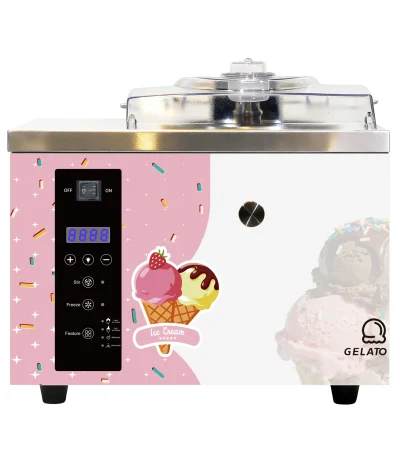
Walk into any thriving ice cream shop, and behind the counter you’ll find the real star of the operation — the ice cream machine. More than just equipment, it’s the engine driving your product quality, daily output, and ultimately, your bottom line. Choose the wrong one, and you’re either overwhelmed by demand or stuck with a machine that costs more than it earns.
For shop owners, the decision between a semi-automatic ice cream machine and a commercial ice cream maker is one of the most consequential purchases you’ll make. Both types serve the same fundamental purpose, yet they differ dramatically in capacity, automation, cost, and the kind of operation they’re built for. A boutique artisan shop has entirely different needs than a high-traffic dessert chain, and the machine you choose should reflect that reality.
This article cuts through the confusion by delivering a direct, practical comparison of both machine types. You’ll find a clear breakdown of features, an honest look at costs and trade-offs, and a step-by-step ice cream machine buying guide to help you match the right equipment to your specific shop goals. Whether you’re opening your first location or scaling an existing business, this guide gives you the clarity to invest with confidence.
Understanding Ice Cream Machines: A Foundation for Shop Owners
At its core, an ice cream machine churns and freezes a liquid base into a smooth, scoopable product — but that simple description barely scratches the surface of what these machines mean for a business. The right equipment determines how much you can produce in a day, how consistent your product tastes, and how efficiently your staff can operate during a rush. For shop owners, understanding the landscape of available machines isn’t optional; it’s foundational to building a profitable operation.
The two primary categories worth knowing are semi-automatic and commercial ice cream makers. Semi-automatic models give operators hands-on control over the freezing and mixing process, making them well-suited for smaller operations focused on craft and variety. Commercial machines, by contrast, are engineered for volume and speed, automating much of the process to keep up with high customer demand. Each type carries distinct implications for your workflow, staffing, and revenue potential. Before comparing them head-to-head, recognizing how each machine type aligns with your production goals puts you in a much stronger position to make a smart, long-term investment.
Semi-Automatic Ice Cream Machines: Features and Ideal Use Cases
A semi-automatic ice cream machine gives operators direct control over key stages of the production process — from monitoring mix consistency to manually initiating freezing cycles. Unlike fully automated systems, these machines require the operator to be present and engaged, making them a natural fit for artisanal shops where craftsmanship and flavor experimentation are part of the brand identity. That hands-on involvement isn’t a drawback; for many shop owners, it’s precisely the point.
The most compelling advantage of a semi-automatic ice cream machine is its lower entry cost, which makes it accessible for startups and small to medium shops working within tight capital budgets. Beyond affordability, these machines offer genuine flexibility — operators can adjust mixing times, control texture, and experiment with small-batch specialty flavors without being locked into rigid automated cycles. This adaptability supports a rotating menu and helps shops differentiate themselves in competitive markets.
Semi-automatic models are best suited for shops producing moderate daily volumes where quality takes priority over sheer speed. They work particularly well for gelato bars, farm-to-cone concepts, or any operation where the production process is part of the customer experience.
Key Features to Understand for Efficient Operation
When evaluating a semi-automatic machine, batch capacity is the first specification to scrutinize — it directly dictates how many servings you can produce per cycle and whether you can meet peak-hour demand. Freezing time per batch affects your throughput, so shorter cycles translate to faster turnaround between rushes. Look for models with intuitive controls that simplify cleaning, since sanitation speed directly impacts daily productivity. Customization options, such as adjustable dasher speeds or variable freezing temperatures, give you the creative control needed to develop signature flavors and maintain consistent quality across every batch.
Commercial Ice Cream Makers: Maximizing Efficiency and Output
A commercial ice cream maker is purpose-built for one thing: volume. These machines are engineered to produce large quantities of ice cream consistently and quickly, often with a high degree of automation that reduces the need for constant operator supervision. Where semi-automatic machines invite hands-on craftsmanship, commercial units prioritize throughput — making them the backbone of busy dessert shops, franchise locations, and any operation where lines form fast and customers expect immediate service.
The defining advantage of a commercial ice cream maker is its ability to deliver consistent quality at scale. Automated controls regulate temperature, mixing speed, and cycle timing with precision, removing the human variability that can affect product texture and flavor from batch to batch. This consistency matters enormously when you’re serving hundreds of customers daily and your brand reputation depends on every scoop tasting identical to the last. Reduced labor dependency is another practical benefit — staff can focus on serving customers rather than monitoring production cycles. Manufacturers like Smartool have developed commercial ice making solutions that reflect this demand for precision and reliability in high-volume foodservice environments.
Commercial machines are the right fit for high-traffic shops, catering operations, or any business planning aggressive growth. The higher upfront investment pays off when daily demand consistently pushes the limits of what smaller equipment can handle.
Advanced Features for High-Volume Shops
Continuous freezing technology is the standout feature separating commercial machines from their semi-automatic counterparts — it allows uninterrupted production without the downtime between batches that limits smaller units. Programmable settings let operators store specific recipes and production parameters, ensuring every batch meets exact standards regardless of which staff member is running the machine. Built for industrial environments, commercial units are constructed with heavy-duty components that withstand daily high-intensity use, significantly extending equipment lifespan. Many models also meet strict hygiene standards with stainless steel contact surfaces and automated cleaning cycles, reducing sanitation time while keeping your operation compliant with food safety regulations.
Direct Comparison: Semi-Automatic vs. Commercial Ice Cream Machines
Choosing between these two machine types comes down to five critical factors, and understanding where each stands helps you avoid a costly mismatch between equipment and business reality.
Cost: Semi-automatic machines carry a significantly lower upfront price, making them accessible for new or smaller operations. However, the total cost picture includes ongoing operational expenses — commercial machines, despite higher initial investment, often deliver lower per-unit production costs at scale due to energy efficiency and reduced labor hours. If your budget is tight today but growth is the plan, factor future operational savings into the equation rather than focusing solely on sticker price.
Production Capacity: This is where the gap widens most dramatically. Semi-automatic units produce in discrete batches, meaning downtime between cycles limits your daily output ceiling. Commercial machines with continuous freezing technology eliminate that ceiling entirely, sustaining output through the busiest service windows without interruption. A shop averaging 200 daily customers operates in a fundamentally different production reality than one serving 20.
Ease of Use: Semi-automatic machines demand more operator involvement, which requires trained staff who understand production nuances. Commercial units automate most decisions, lowering the skill threshold needed per employee and reducing training time — a meaningful advantage in high-turnover retail environments.
Maintenance Requirements: Semi-automatic machines generally involve simpler mechanical systems, making repairs less expensive and easier to source. Commercial equipment requires more rigorous preventive maintenance schedules, though many modern models include diagnostic features that flag issues before they become failures.
Scalability: Semi-automatic machines serve their purpose well at current scale but create bottlenecks as demand grows. Commercial machines are built with growth in mind, supporting expanded menus, additional locations, and catering operations without requiring immediate equipment replacement.
Ice Cream Machine Buying Guide: A Step-by-Step Decision Framework
Navigating the purchase decision becomes far more manageable when you break it into structured steps. This ice cream machine buying guide walks you through the exact considerations that separate a smart investment from an expensive mistake — starting with what your shop actually needs before ever looking at a spec sheet.
Step 1: Assess Your Shop’s Production Needs and Goals
Begin by calculating your realistic daily output requirements. Estimate your average customer count, factor in peak season surges, and determine how many flavors you plan to offer simultaneously. A shop rotating twelve specialty flavors weekly has fundamentally different machine requirements than one running four core flavors year-round. Project your growth trajectory over the next two to three years as well — buying for today’s volume while ignoring next year’s ambitions often leads to premature equipment replacement.
Step 2: Analyze Budget and Return on Investment (ROI)
Resist the temptation to evaluate cost as a single number. A lower-priced semi-automatic machine might appear budget-friendly until you account for labor hours spent managing manual cycles, slower throughput during rushes, and the opportunity cost of lost sales when production can’t keep pace with demand. Calculate your expected revenue per machine cycle, estimate payback period against upfront investment, and factor in energy consumption and maintenance costs annually. A commercial machine with higher entry cost can deliver stronger ROI within 18 months for a shop serving consistent high volume.
Step 3: Evaluate Key Features and Specifications
Once budget and capacity needs are defined, match them against technical specifications. Horsepower determines how efficiently the machine handles dense mixes; insufficient power leads to inconsistent texture. Freeze time per batch directly affects your service speed during peak hours. Automation level determines staffing requirements — higher automation supports leaner teams. Cross-reference every specification against your production goals established in Step 1 to confirm genuine alignment before committing.
Implementing Your Choice: Practical Solutions for Shop Integration
Purchasing the right machine is only half the battle — how you integrate it into daily operations determines whether that investment actually performs. Start with proper installation: position the machine in a location with adequate ventilation, accessible power supply matching the unit’s electrical requirements, and enough clearance for staff to work efficiently around it. Poor placement creates workflow bottlenecks that slow service even when the machine itself performs flawlessly.
Staff training should happen before opening day, not during a lunch rush. Walk every team member through startup procedures, cycle management, and shutdown protocols. For semi-automatic machines, ensure staff understand how to read mix consistency and recognize when adjustments are needed. For commercial units, focus training on programmable settings and basic troubleshooting so minor issues don’t require a technician call.
Optimize your production workflow by scheduling batch runs during low-traffic windows, keeping peak service hours free for customer-facing tasks. Finally, establish a preventive maintenance schedule from day one — clean components daily, inspect seals and blades weekly, and schedule professional servicing quarterly. Consistent maintenance protects your investment and prevents costly mid-service breakdowns.
Choosing the Right Machine for a Stronger Ice Cream Business
The choice between a semi-automatic and a commercial ice cream maker isn’t about which machine is objectively better — it’s about which one is right for your shop. Semi-automatic machines deliver hands-on control, creative flexibility, and an accessible entry point that suits artisanal operations and smaller venues focused on craft over volume. Commercial machines bring automation, consistency, and the raw output capacity that high-traffic shops depend on to stay profitable through peak demand.
Both types have a legitimate place in the industry. The mistake most shop owners make is letting budget alone drive the decision, without accounting for production capacity, staffing realities, and where the business is headed in two or three years. A machine that fits perfectly today but creates bottlenecks next season is never the bargain it appears to be.
Use the buying guide in this article as your decision framework. Start with your production needs, work through the numbers honestly, and match technical specifications to your actual operational goals. When those three steps align, the right machine becomes obvious. Invest in equipment that matches your current reality while leaving room for the growth you’re working toward — that’s the decision that builds a stronger, more sustainable ice cream business.