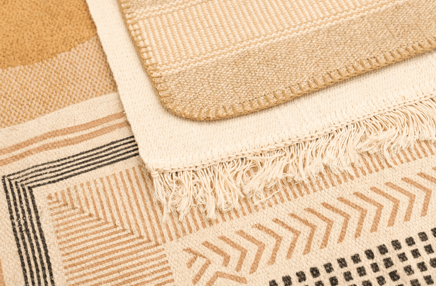
The eco-friendly nature, earthy aesthetic, and natural texture make jute rugs ideal for Indian bedrooms and living rooms. On the other hand, synthetic rugs are ideal for high-traffic areas and monsoon-prone regions due to their ease of cleaning and moisture-resistant nature.
Key Takeaways
- The versatility of jute rugs’ designs and colors adds elegance to Indian houses.
- Synthetic rugs are convenient for high-traffic areas and are available with budget-friendly options.
- Jute rugs are convenient in low-traffic areas, while synthetic rugs are the best choice for covered verandas.
A report suggests that in 2026, the carpet and rug market of India is estimated at $1.8 billion, and by 2031, the market size is expected to grow to $1.87 billion at a 9.61% CAGR. The robust trajectory of the Indian rug market involves jute and synthetic rugs due to their wide scale of use in Indian houses and commercial areas. While jute rugs are known for being renewable and sustainable in nature, synthetic rugs are popular due to their stain resistance and variety.
So, which one should you go for, Indian houses? Which can be the ideal choice? Let’s find out.
What is the Significance of Jute Rugs in Indian Houses?
Natural jute rugs complement the Indian climate, offering easy maintenance and installation and providing earthy, affordable, and comfortable flooring options. Here’s the significance of using jute rugs in Indian houses.
Sustainability and Durability
Research shows that the production of 1 metric ton of jute involves 7% of the energy needed for the production of the same amount of polypropylene (used in synthetic rugs). Moreover, since it is renewable and biodegradable, jute carpets are ideal for eco-conscious Indian houses. On the other hand, since jute is a durable and strong material, rugs made with jute fit perfectly in high-traffic areas like living rooms.
Climate Suitability and Versatile Aesthetics
The natural insulation of jute rugs provides comfort underfoot in both hot and cold, humid climates, with temperature-regulating factors. Since it is a breathable material, in hotter climates, it creates a breezy ambiance, and in winter, these rugs can trap heat with their natural insulating properties.
Apart from this, the availability of earthy, natural-toned rugs allows homeowners to blend them seamlessly with various interior designs. So, whether it’s a traditional or modern minimalist Indian house, jute carpets can ensure comfort and consistency at the same time.
Affordability and Low Maintenance
Compared to silk hand-knotted or luxury wool rugs, jute offers an organic, high-end look in Indian houses at an affordable price. The natural jute rugs in India, thus, can be used widely across different rooms. Moreover, these rugs easily hide stains and dust, which are common in varied Indian climates. Immediate blotting of spills and simpler regular vacuuming are enough to keep the jute carpets clean and durable.
Now, what are the pros and cons of using jute rugs in Indian houses? Here’s our answer.
Jute Rugs: Pros
- Biodegradable and a safe option for allergy-sensitive homes.
- A cheaper option, compared to silk and wool rugs, and requires regular vacuuming.
- Creates a comfortable and welcoming feel, especially in living rooms.
Jute Rugs: Cons
- Rough texture may cause an uncomfortable underfoot feeling.
- Not ideal for constant, heavy traffic areas, due to fiber breakdown and faster fraying.
- Absorbs water easily, and is prone to mildew/mold.
What is the Significance of Synthetic Rugs in Indian Houses?
The synthetic rug market in India witnesses a rapid growth due to affordable prices, a wide range of designs, and durability. Often made of polyester, nylon, and olefin, these modern rugs in India are popular in both commercial and residential sectors due to their versatility. Here’s the significance of synthetic rugs in Indian houses.
Stain and Fade Resistance
Synthetic materials such as polypropylene are known for high stain-resistance. It makes them ideal for homes with pets and children, kitchens, and dining rooms. Moreover, they are also a popular choice in Indian houses, since they are UV-resistant, which prevents color from easily fading.
Ideal for Humidity and Monsoon
While natural fibers like jute can easily absorb moisture – an ideal ground for mold and mildew – and affect the durability of rugs, synthetic rugs do not absorb water. Especially due to this reason, these rugs are often considered an ideal choice during the monsoon or for houses in coastal areas.
See also: What’s the Difference Between Wet Shoes and Regular Shoes?
Accessibility Versatility in Design and Color
Since synthetic modern rugs in India are more economical, compared to silk or handwoven rugs, it allows for frequent styling and a wide range of availability. Moreover, the availability of synthetic rugs in India with a vast range of modern, intricate patterns and vibrant colors makes it ideal for traditional or contemporary houses.
So, what are the pros and cons of synthetic rugs? Check the lists below.
Synthetic Rugs: Pros
- Versatile with designs and colors.
- Resistant to moisture and stains, it requires low-maintenance.
- Budget-friendly, compared to handmade rugs.
Synthetic Rugs: Cons
- Some synthetic rugs are flammable or melt easily.
- Non-biodegradable, contributing to the amount.
- Tends to flatten in high-traffic areas, especially polyester, losing its texture.
What are the Differences between Jute and Synthetic Rugs?
Check the table below for differences between jute and synthetic rugs.
| Feature | Jute Rugs | Synthetic Rugs |
| Material Source | Natural plant-based fiber | Man-made petrochemicals |
| Texture & Feel | Coarse, rustic, and textured. | Soft (polyester) to firm (polypropylene). |
| Durability | Moderate; best for low-to-medium traffic areas. | High; resistant to wear and crushing |
| Moisture & Stain | Highly absorbent. Prone to mold/mildew. | Moisture-resistant (especially Polypropylene), ideal for wet areas |
| Maintenance | Low to moderate; needs regular vacuuming. | Low; easy to clean and wash. |
| Eco-Friendliness | Biodegradable, renewable, and sustainable | Non-biodegradable, causing landfill waste |
| Best Placement | Bedrooms, living rooms, low-traffic areas | Kitchens, entryways, outdoors |
Table: Key Differences between Jute and Synthetic Rugs
Which of These Two is the Best Choice for Indian Houses?
Here are our tips on when to choose jute rugs in Indian homes.
When to Choose Jute Rugs
Check the list below to know when and where you should opt for jute bags:
- If you’re looking for an earthy, rustic, natural, or bohemian look.
- For lower foot-traffic areas, such as bedrooms, living rooms, or dining rooms
- For dry regions, since in humid regions, they’re prone to moisture and mold.
- When you’re looking for a sustainable option on a budget.
When to Choose Synthetic Rugs
Check the list below to know when you can opt for synthetic rugs:
- Planning to improve the decor in high-traffic areas? Synthetic rugs are the best option in foyers, hallways, kitchens, and living rooms.
- Due to high stain resistance, these are the best to opt for in the kitchen or dining rooms, since spills are frequent in these areas.
- An excellent choice for covered verandas or balconies, as compared to jute, these rugs can handle humidity more efficiently.
Pick from Jute or Synthetic Rugs for Your Home
Planning to renovate your home decor? Choose the best rug company in your area, following public reviews and testimonials. Don’t forget to check pricing to find affordable rugs.