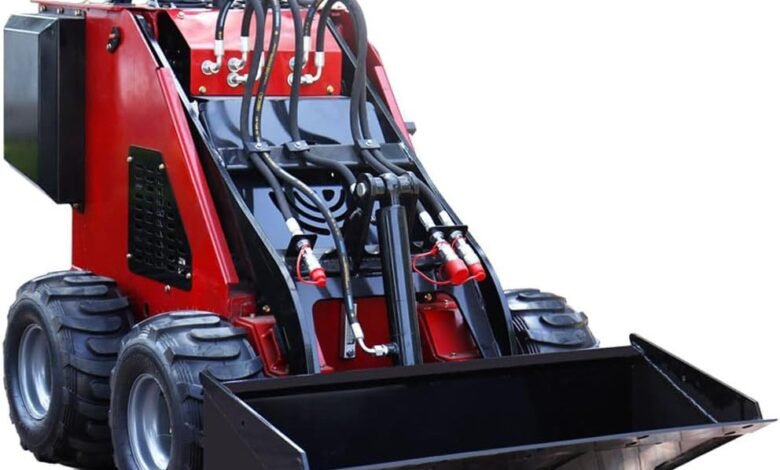
Residential contractors face a strange middle ground. A wheelbarrow is too slow, a full-size loader is too big for the yard, and hand labor eats the entire margin on a bid. That gap is exactly what compact walk-behind and stand-on loaders were built for. They fit through a garden gate, run on a rubber track that respects the lawn, and swap attachments in under a minute so one machine handles digging, grading, hauling, and forking pallets. Picking one, though, is not just a matter of grabbing the cheapest unit on the lot. Track width, tip capacity, hydraulic flow, and control style each change what the machine can do on the site you actually work. This guide walks through the choices step by step so a landscape contractor, hardscape installer, or renovation crew can arrive at the right model without buyer’s remorse.
Step One: Map the Access Points on Your Typical Job
Access dictates size. Before you look at any brochure, measure the narrowest gate, path, or basement stair on the jobs you take most often. A residential side gate is usually thirty-six inches, but older properties can be closer to thirty. If you routinely work behind homes, a machine that measures thirty-four inches or less at the tracks will save hours of fence disassembly. The moment you find yourself removing pickets to squeeze a machine through, the wrong unit has already been chosen.
Weight Distribution and Sensitive Surfaces
Ground pressure is the second half of the access question. A well-designed mini skid steer loader sits under five pounds per square inch on rubber tracks, which is light enough to cross a finished lawn without leaving ruts. Compare that to a wheeled skid or a full-size machine and the reason these compact units dominate residential work becomes obvious. If the customer values their turf, this number matters more than horsepower on paper.
Step Two: Match Tip Capacity to the Materials You Move
Rated operating capacity, often called ROC or tip capacity, tells you how much the loader can lift safely before it tips forward. For most hardscape and landscape work, six hundred to eight hundred pounds is the practical range. That covers a full pallet of pavers cut in half, a bucket of wet clay, or a scoop of gravel. Machines rated much lower will strain and dump loads unexpectedly. Machines rated much higher usually mean a bigger footprint, so pushing for maximum capacity without a real need is the fastest way to buy the wrong size.
Hydraulic Flow for Attachments
Attachments are why these loaders replace so many trips with the wheelbarrow. But every attachment has a minimum flow requirement, and if the machine cannot supply it, the attachment stalls under load. Standard flow around eleven to fourteen gallons per minute handles augers, trenchers, and light grapples. High-flow packages closer to eighteen or twenty gallons per minute open the door to stump grinders, cold planers, and rotary brooms. Decide which attachments you will actually rent or own in the next two years, then buy a loader with hydraulics that meet the highest of those demands.
Step Three: Choose the Right Control Style
Walk-behind, stand-on platform, and ride-in models each suit different work. Walk-behind units are the lightest and cheapest, and they let the operator step off in tight quarters to check clearance. Stand-on platforms cut fatigue on jobs longer than a couple of hours because the operator stops walking sideways next to the machine. Ride-in cabins are rare in this class and typically only appear on the largest units near the top of the compact segment.
Hand Controls versus Foot Pedals
Most compact loaders use twin hand levers for drive and a separate lever for the loader arms and bucket tilt. Some operators prefer joystick controls for finer bucket work, particularly during grading and finish passes. If you have operators moving between machines, matching control style across your fleet reduces training time and mistakes.
Step Four: Plan for Maintenance and Uptime
A machine that sits in the shop earns nothing. Look at how the engine, hydraulic filter, and battery are accessed before you buy. If daily checks require a wrench and a service manual, operators will skip them. The best compact loaders, including several models from MMS INDUSTRIAL, put grease points, filters, and fluid dipsticks within reach of a standing adult without tools. Track tension adjusters should be reachable with a single hand pump.
Parts Availability and Local Support
Even the best-built machine will eventually need a track, a hydraulic hose, or an attachment coupler. Before signing a purchase order, confirm that common wear parts ship from a warehouse in your country and that a mechanic can diagnose the machine without proprietary software. This one question saves more downtime than any spec on the sticker.
Choosing a Compact Loader That Fits Your Work
The right compact loader is a match between access width, tip capacity, hydraulic flow, and the control style your crew actually enjoys running. Start with the tightest gate you cross every week, set a realistic lift target based on the pallets and buckets you move, and confirm the hydraulic flow supports the attachments on your two-year horizon. Then verify that maintenance is simple and parts are close at hand. Contractors who follow this order end up with a machine that pays for itself in labor savings within a single busy season, and a crew that fights over who gets to run it rather than who has to walk the wheelbarrow. Buy for the work you do, not the brochure image you liked, and the loader will earn its keep.