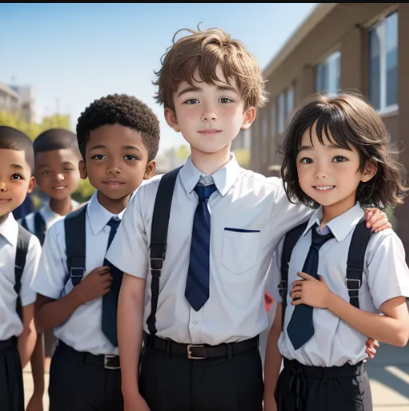
Before a Word Is Spoken
In film, theater, sports, and the workplace, uniforms speak before anyone says a word. They introduce characters, signal hierarchy, and hint at history in a single glance. Long before dialogue begins, the audience is already forming conclusions.
That is because uniforms are visual shorthand. A carefully designed outfit can suggest authority, discipline, creativity, or rebellion. Whether crafted by a costume designer for a film set or by a professional company uniform manufacturer for a business, the intention is the same. The uniform tells a story.
We rarely pause to think about it, but we instinctively read uniforms like text. Color, fabric, fit, and insignia all contribute to a narrative that shapes perception.
Uniforms Establish Identity Instantly
One of the most powerful storytelling functions of a uniform is instant identity. In movies and theater, costumes define who belongs to which group. Soldiers wear coordinated attire. Medical professionals wear scrubs or lab coats. Athletes wear jerseys with team colors.
The audience does not need a long explanation. The uniform does the work.
According to research discussed by the American Psychological Association on social perception and first impressions, visual cues heavily influence how quickly we categorize and interpret people. Uniforms accelerate that process by providing clear signals about role and status.
In real world settings, the same principle applies. A uniform communicates affiliation and purpose. Customers immediately recognize who can assist them. Colleagues identify leadership through subtle differences in attire.
The uniform becomes a visual introduction.
Color and Symbol Carry Narrative Weight
Colors and symbols within uniforms deepen the story. Dark, structured tones often suggest authority and discipline. Bright colors may signal energy or creativity. Logos and insignia add layers of meaning.
Think about how sports teams build loyalty through color. Fans feel emotionally connected to a palette. The uniform becomes a banner of belonging.
In storytelling mediums like film, costume designers intentionally use color to reflect character arcs. A character who begins in muted tones may gradually adopt brighter hues as confidence grows. These choices are rarely random. They guide the audience’s interpretation.
The Smithsonian National Museum of American History explores how clothing and uniforms have reflected social identity and historical shifts over time. Their collections reveal how garments can represent entire movements and eras.
Uniforms, in this sense, are visual chapters in a larger narrative.
See also: Understanding Business Software and Its Strategic Role
Status and Hierarchy Without Dialogue
Uniforms also communicate hierarchy. Small differences in design can signal rank or authority. A badge, a stripe, or a slightly different cut distinguishes leadership from entry level roles.
In military and emergency services, these distinctions are formalized and highly structured. In corporate settings, they may be more subtle. A manager might wear a variation that signals responsibility without appearing separate from the team.
These visual cues reduce confusion and establish order. They help people understand roles without verbal explanation. In storytelling, this clarity allows the plot to move forward efficiently. In business, it creates smoother interactions.
Hierarchy conveyed through attire can feel natural because it is embedded in design rather than imposed through speech.
Uniforms Build Group Cohesion
Beyond external storytelling, uniforms create an internal narrative for those wearing them. When individuals put on the same attire, they become part of a collective.
This shared visual identity reinforces belonging. In sports, wearing a team jersey strengthens unity. In theater, costumes immerse actors in their roles. In workplaces, coordinated uniforms remind employees that they represent something larger than themselves.
The story told by the uniform is not just for the audience. It is for the wearer. It shapes behavior and mindset.
Psychologists have studied how clothing influences performance and self perception, a concept known as enclothed cognition. When individuals wear attire associated with competence or authority, their behavior often aligns with those traits. Uniforms, therefore, do not just tell a story. They help people live it.
Brand Narratives in Everyday Spaces
Businesses use uniforms as branding tools, but branding is simply another form of storytelling. A well designed uniform aligns with a company’s mission and values.
A hospitality brand may choose soft colors and approachable styling to signal warmth. A tech company might opt for sleek, modern elements to convey innovation. These choices reinforce the brand narrative in every customer interaction.
When employees consistently present a unified look, the brand story feels cohesive. Customers do not have to decipher who represents the company. The uniform makes it clear.
Over time, this consistency builds recognition. The uniform becomes a symbol associated with specific experiences and expectations.
Evolution Over Time
Stories evolve, and so do uniforms. Changes in design often reflect shifts in identity. A sports team updating its colors may signal a new era. A company redesigning its uniforms might be communicating growth or modernization.
In film and theater, costume changes often mark turning points in a character’s journey. A new outfit can signify transformation or redemption.
Similarly, organizations that update their uniforms are often redefining their narrative. They are telling the world, and their employees, that something has changed.
Uniforms are dynamic storytelling tools. They adapt as the story progresses.
Why This Matters More Than We Think
It is easy to dismiss uniforms as purely functional. They provide consistency, safety, or brand visibility. But their deeper value lies in communication.
Before a handshake, before a speech, before a product demonstration, the uniform has already spoken. It has set expectations. It has shaped perception.
Recognizing uniforms as storytelling tools allows organizations and creators to use them intentionally. Instead of viewing them as an afterthought, they can be designed to reinforce identity, convey status, and support narrative arcs.
In every setting where uniforms appear, a story is being told. The question is whether that story is accidental or deliberate.
When crafted with intention, uniforms become more than clothing. They become living symbols of who we are, what we represent, and where we are headed.