Choosing artwork isn’t just about finding a piece you love—it’s also about selecting the right size to complement your room. Even the most stunning artwork can feel out of place if its proportions don’t match the wall or furniture. Size plays a major role in balance, harmony, and overall visual impact, making it one of the most important decisions in home decorating.
If you’re browsing for art in multiple sizes—from modern abstracts to unique themed collections—sites like MusaArtGallery offer a curated range that suits many different spaces.
Why Artwork Size Matters
Before considering color or theme, think about scale. Artwork that’s too small disappears on a large wall, leaving the space feeling empty or unfinished, while oversized pieces can overwhelm a small area. The right size helps anchor the room, complement furniture, and create a polished, cohesive design. Many designers agree that size influences a room’s visual success even more than the artwork’s style.
Measure Your Wall First
It’s essential to measure the width and height of the wall where your artwork will hang. A helpful guideline is to choose art that occupies roughly half to three-quarters of the wall’s width. This ensures the piece feels intentionally placed and not awkwardly undersized. For instance, if your wall is around 100 inches wide, an artwork between 50 and 75 inches wide usually looks well-balanced.
Choosing Art Above Furniture
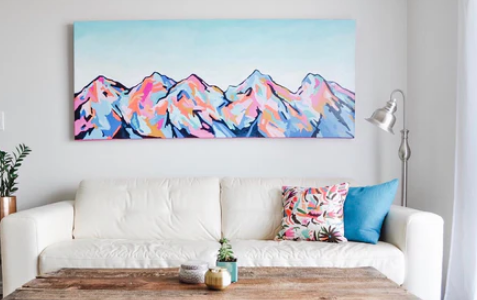
When placing artwork above sofas, beds, or console tables, the piece should be proportionate to the furniture beneath it. A good rule is selecting artwork that’s about two-thirds the width of the furniture. This creates visual harmony and prevents the art from feeling disconnected from the room’s layout. A 90-inch sofa, for example, pairs beautifully with a 60-inch artwork; a smaller bed looks more balanced with a medium-sized piece.
Orientation and Shape
The orientation of your artwork can dramatically influence the way a room feels. Vertical pieces enhance height and make walls seem taller, working well in hallways or high-ceilinged areas. Horizontal pieces widen the visual field and create a grounded feeling, which makes them ideal for living rooms, bedsides, or mantels. Choosing the appropriate orientation helps the artwork work with the room rather than compete with it.
The Appeal of Oversized Art
Oversized artwork has become a favorite in modern interiors because of its bold, dramatic impact. A single large piece can instantly transform a room, adding personality and focus. Oversized art suits open-concept spaces, tall entryways, and large living rooms particularly well, where smaller pieces would get lost. If you enjoy visually striking themes, consider exploring the Steampunk Art Collection at MusaArtGallery—many pieces in this collection are available in impressive statement-making sizes.
Creating a Gallery Wall
For homes that favor a more eclectic or personal style, a gallery wall is a beautiful alternative to one large piece. The key is to treat the entire arrangement as if it were a single artwork. The overall grouping should follow the same proportion rules as a singular piece, filling an appropriate amount of wall space. While spacing between frames is important, the design feels more intentional when the gallery wall reads as one cohesive installation rather than scattered individual pieces.
Getting the Height Right
Even the perfectly sized artwork loses its effect when hung too high or too low. A widely accepted guideline is to hang artwork at eye level—usually around 57 to 60 inches from the floor to the center of the piece. When placing art above furniture, position it about 6 to 10 inches above the furniture’s top edge. This keeps the artwork visually connected to the room and avoids creating awkward empty gaps.
Room Size and Furniture Scale
Always consider how the artwork interacts with the size of the room and the scale of the furniture. Spacious rooms with large furnishings benefit from larger artworks that match their presence, while smaller rooms or delicate furniture look more balanced with moderately sized pieces. When art, furniture, and room proportions align well, the entire space feels intentional and aesthetically pleasing.
Try Before You Buy
If you’re unsure about the size, a simple trick is to tape the artwork’s dimensions onto the wall using masking tape. This gives you a realistic preview of how the piece will feel in the room without making a commitment. It’s an easy way to avoid sizing regrets and ensures the artwork will feel right once it arrives.
Final Thoughts
Choosing the perfect artwork size is essential for creating a visually harmonious space. By considering your wall measurements, furniture scale, orientation, and room proportion, you can select pieces that enrich your environment and elevate your home’s design. Whether you gravitate toward minimalist prints, bold contemporary art, or dramatic themed pieces, the right size will make your selection shine.