Indoor farming is entering a new era. As artificial intelligence continues to reshape industries worldwide, it is now transforming how food is grown inside homes, warehouses, and urban buildings.
In 2026, AI-powered vertical hydroponic systems are redefining efficiency, sustainability, and accessibility—making high-tech farming possible in even the smallest spaces.
By combining automation, data analysis, and intelligent design, AI is helping vertical hydroponics reach its full potential.
How AI is changing indoor farming
Traditional hydroponic systems rely on manual monitoring and preset schedules. While effective, they still depend heavily on human input.
AI-powered systems go further by continuously learning from plant behavior and environmental data. Using sensors and machine learning, these systems track light exposure, water levels, nutrient concentration, temperature, humidity, and plant growth patterns.
AI analyzes this data in real time and automatically adjusts conditions to create the ideal growing environment. Instead of guessing, growers now rely on precision.
As AI tools become more advanced, your indoor vertical hydroponic garden will become increasingly autonomous. Future systems may include self-learning growth models, adaptive building integration, and fully automated supply chains.
For home users and commercial growers alike, AI will continue to lower barriers and increase efficiency—making fresh, locally grown food available year-round.
Smart growth optimization
One of AI’s biggest advantages is its ability to optimize plant growth. Each crop has unique needs, and those needs can change throughout its life cycle.
This means that AI systems can now increase lighting during growth spurts, reduce water during low-absorption phases, and adjust nutrients based on leaf color and size.
Additionally, they can also predict harvest timing and identify growth delays early. This leads to faster growth, higher yields, and healthier plants—without additional effort from the user.
Automation for effortless gardening
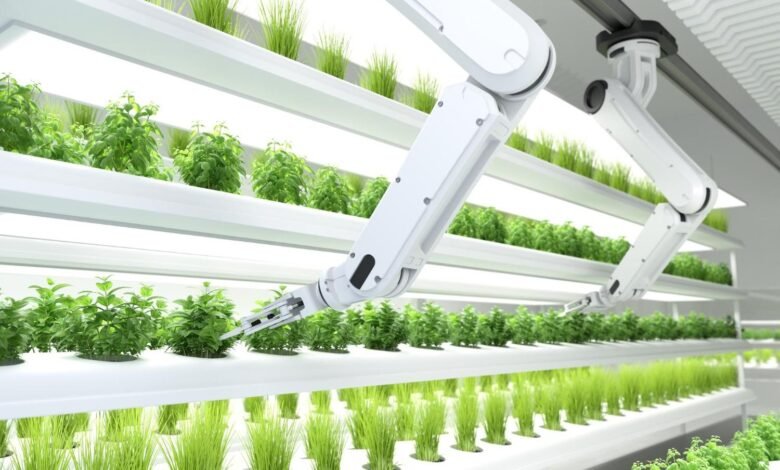
As technology advances, vertical hydroponic systems are becoming increasingly autonomous. In many AI-powered models, daily maintenance is nearly eliminated.
Key automated features include self-regulating irrigation, automated nutrient mixing, and smart lighting cycles. On top of that, there are also climate control integration and maintenance alerts features.
For busy homeowners and urban professionals, this “set-it-and-grow-it” approach makes indoor farming practical and appealing.
Predictive problem detection
One of the most powerful uses of AI in vertical hydroponics is early problem detection. Diseases, nutrient deficiencies, and equipment failures often go unnoticed until damage is visible.
AI systems can identify subtle warning signs by analyzing leaf discoloration, growth irregularities, water flow patterns, and sensor inconsistencies.
When issues arise, users receive instant notifications and recommended solutions. This prevents crop loss and reduces long-term costs.
Data-driven crop selection
Believe it or not, AI is also helping users choose what to grow. By analyzing location, climate, space, and usage patterns, smart systems can recommend the most suitable crops.
For example, an AI system might suggest fast-growing herbs for beginners, high-yield greens for families, specialty crops for culinary enthusiasts, and low-light plants for shaded rooms.
This personalized guidance improves success rates and reduces wasted resources.
Sustainability through intelligence
Vertical hydroponics is already known for conserving water and space. AI makes these systems even more sustainable.
By precisely controlling resources, AI reduces water waste, excess nutrient runoff, energy consumption, and crop failure.
Some advanced systems even integrate with smart grids and renewable energy sources, optimizing power usage during off-peak hours.
Scaling from homes to cities
While many people associate vertical hydroponics with home systems, AI is also driving large-scale indoor farming.
Commercial vertical farms now use AI to manage thousands of plants simultaneously. These farms supply fresh produce to urban areas year-round, reducing dependence on long-distance agriculture.
As technology becomes more affordable, innovations from commercial farms continue to filter into consumer products—making home systems more powerful each year.
Enhancing the user experience
AI is making indoor farming more intuitive and engaging. Modern systems often include mobile apps that offer growth-tracking dashboards and virtual plant health reports.
In addition, with an app, you can get harvest predictions, personalized tips, and community integration. Some platforms even use conversational AI assistants to guide users through setup and troubleshooting.
This turns gardening into a guided, confidence-building experience.
The future of AI-powered vertical hydroponics
Looking ahead, experts predict even deeper integration between AI and indoor farming. Future systems may include fully self-learning growth models, emotion-responsive lighting and ambiance, and voice-controlled farming assistants.
On top of all that, you can also expect AR-guided maintenance and fully modular smart-farm walls.
These developments will make indoor farming more adaptive, efficient, and personalized than ever before.
Bottom Line
AI is transforming vertical hydroponics from a hobby into a sophisticated food-production system.
By optimizing growth, reducing waste, and simplifying maintenance, intelligent systems are making indoor farming accessible to more people than ever.
In 2026 and beyond, the future of vertical hydroponics lies not just in growing upward—but in growing smarter.