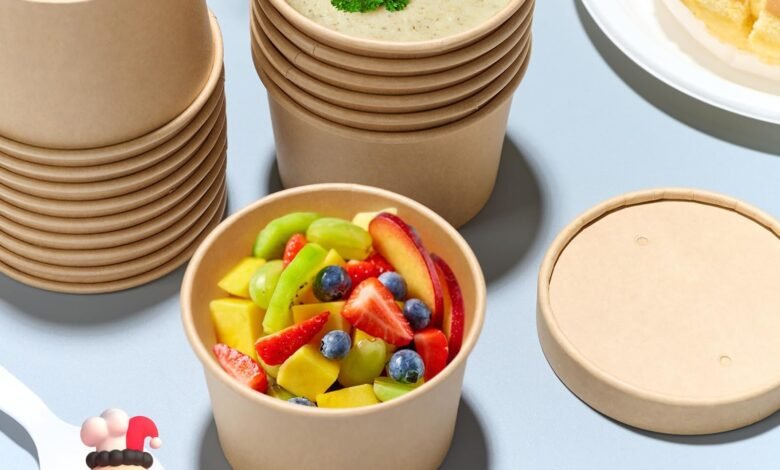
Every day, caterers and takeout operators face a universal challenge: how do you transport hot soups, saucy noodles, and mixed meals without compromising quality or creating a mess? The answer lies not just in the food itself, but in the packaging that protects it. While menus and pricing get most of the attention, reliable containers often determine whether a customer becomes a repeat patron or shares a photo of a leaked disaster online. Paper bowls have emerged as a frontline solution, yet not all are created equal. What separates a flimsy container that fails mid-delivery from a professional-grade bowl that maintains structural integrity through hours of transport? This article examines the engineering, economics, and practical considerations behind paper bowls designed for high-volume food service. We’ll explore the specific features that define true durability, compare paper bowls against alternative packaging formats, and provide caterers with actionable criteria for selecting containers that protect both their food and their reputation in demanding commercial environments.
Why Durability is Non-Negotiable in Food Packaging
Durability in paper bowls encompasses three critical performance dimensions: leak resistance that prevents liquid migration through seams or material, structural integrity that maintains shape under the weight of dense foods and stacked transport, and heat retention that keeps hot meals at safe serving temperatures. When these attributes fail, the consequences cascade quickly. A soggy bottom transforms a carefully plated noodle dish into an unsalvageable mess before it reaches the customer. Collapsing sidewalls spill curry across delivery bags, creating liability concerns and guaranteed refund requests. Leaks don’t just ruin one meal—they contaminate adjacent orders, multiply waste, and generate the kind of visceral negative reviews that damage online reputations for months. Beyond customer satisfaction, compromised containers pose genuine food safety risks when structural failure exposes contents to contamination during transport. The financial impact extends past replacement costs: failed packaging erodes customer lifetime value, increases customer service burden, and forces operational teams into reactive firefighting rather than strategic growth. Viewing durable packaging as a strategic investment reframes the decision. A premium bowl that costs three cents more but eliminates a five-dollar refund and preserves a customer relationship delivers exponential returns. For caterers operating on thin margins, durability isn’t a luxury feature—it’s the baseline requirement that separates sustainable operations from costly chaos.
Paper Bowls vs. Other Takeout Food Boxes: A Comparative Analysis
Paper bowls occupy a distinct position among takeout packaging options, each format serving specific operational needs. Plastic clamshells offer superior visibility and rigid protection for delicate items like salads, but they lack insulation and carry growing sustainability concerns that alienate environmentally conscious customers. Aluminum trays excel at heat retention and oven-safe reheating, making them ideal for casseroles and baked dishes, yet their higher cost and poor performance with acidic foods limit versatility. Molded fiber containers provide excellent eco-credentials and moderate insulation, but their porous nature makes them unsuitable for liquid-heavy preparations without secondary liners. Paper bowls bridge these gaps for single-serve, broth-based, or sauce-intensive meals. Their coated interiors handle liquids that would compromise molded fiber, while curved walls contain mixed-component dishes more securely than flat clamshells. For rice bowls, ramen, chili, and grain salads with dressing, paper bowls deliver the critical combination of leak resistance, adequate insulation, and stackable efficiency. Cost positioning falls between budget molded fiber and premium aluminum, offering caterers a middle-ground solution. The format’s circular footprint also optimizes delivery bag space compared to rectangular boxes. When menu composition centers on soups, stews, noodle dishes, or any preparation where liquid management and portion control matter, paper bowls emerge as the functionally superior choice that balances performance, sustainability, and economic practicality.

Meeting Caterer Needs: Organization, Freshness, and Bulk Efficiency
Solution: Ensuring Food Stays Organized and Fresh
Professional caterers require containers that preserve meal integrity from kitchen to customer, often across hours of transport and holding time. Paper bowls engineered for this purpose incorporate three essential features: secure, leak-resistant lids with interlocking rim systems that create hermetic seals preventing both liquid escape and external contamination; double-walled construction or specialized PE/PLA coatings that provide moisture barriers while maintaining insulation to keep hot foods above 140°F and cold items chilled; and compartmentalized designs that separate components like proteins, sauces, and sides to prevent sogginess and maintain intended textures. To implement these solutions effectively, caterers should follow a systematic approach. First, conduct real-world testing by filling bowls with your most challenging menu items—think pho broth, butter chicken, or dressing-heavy salads—then transport them for 45 minutes in typical delivery conditions to identify failure points. Second, prioritize bowls with audible snap-on lids that provide tactile confirmation of proper sealing, reducing staff error during high-volume packing. Third, evaluate compartmentalized options for signature dishes: a three-section bowl transforms a deconstructed grain bowl from a potential mess into an organized, Instagram-worthy presentation that arrives exactly as plated. This targeted approach ensures your packaging actively protects food quality rather than merely containing it.
Solution: Managing Costs with Bulk Food Containers
Bulk purchasing transforms paper bowls from a recurring expense into a strategic cost advantage. Volume orders typically reduce per-unit costs by 20-40% compared to small-batch purchases, while stabilizing inventory against supply chain disruptions and price volatility. For a mid-sized catering operation serving 500 meals weekly, the difference between retail and bulk pricing can exceed $3,000 annually on bowls alone—capital that directly improves bottom-line profitability. To capture these savings effectively, start by calculating your annual container usage across all menu items, then multiply by 1.15 to account for seasonal peaks and waste. This figure determines your optimal bulk order size. Next, establish relationships with two to three suppliers who offer tiered bulk pricing and negotiate annual contracts that lock in rates while including quarterly delivery schedules to manage storage constraints. Finally, perform a storage audit: bulk containers require approximately 12 cubic feet per 1,000 units, so balance maximum discount tiers against available dry storage space and capital tied up in inventory. For operations with limited storage, consider cooperative purchasing with neighboring businesses or monthly partial deliveries from bulk orders. The key is treating bulk purchasing as a working capital optimization strategy, not just a procurement tactic.
Key Features to Look for in Professional-Grade Paper Bowls
Selecting paper bowls that withstand commercial demands requires evaluating five critical specifications. Material composition forms the foundation: prioritize bowls manufactured from at least 30% post-consumer recycled content with FSC or SFI certification, which signals responsible sourcing while meeting corporate sustainability mandates that increasingly influence B2B purchasing decisions. Construction quality separates professional from consumer-grade products—double-walled designs provide superior insulation and rigidity, while interior coatings matter significantly: polyethylene (PE) linings offer proven moisture resistance at lower cost, whereas polylactic acid (PLA) coatings deliver comparable performance with compostability that appeals to eco-conscious markets. Capacity and size range must align with your menu architecture; standardizing on two to three bowl sizes (typically 16 oz, 24 oz, and 32 oz) simplifies inventory while covering most single-serve applications from side soups to entrée portions. Lid compatibility cannot be an afterthought—verify that lids create positive-pressure seals with audible confirmation and that both components share the same supplier to ensure consistent fit across production batches. Finally, confirm microwave and freezer safety ratings if your operation involves reheating services or meal prep models, as thermal cycling exposes inferior adhesives and coatings that separate or leach. These specifications collectively define durable packaging solutions that protect food quality, satisfy regulatory requirements, and support operational consistency across thousands of service cycles.

Implementing Your Durable Packaging Solution: A Step-by-Step Guide
Selecting and integrating the right paper bowls requires a methodical approach that moves beyond supplier catalogs to real-world validation. Begin with a comprehensive audit of current needs: document every menu item requiring bowls, noting specific challenges like high liquid content in pho or oil separation in curry dishes, then quantify weekly volume by size category and map transport conditions including average delivery distances and seasonal temperature extremes. This audit reveals your true requirements rather than assumed needs. Next, source samples from three to four reputable suppliers who specialize in food service packaging, requesting representative units across your required size range along with technical specification sheets detailing coating types, temperature tolerances, and certifications. Suppliers like Jolly Chef and other established tableware providers often offer comprehensive sample programs that allow caterers to test products in actual operational conditions before committing to bulk orders. Conduct rigorous real-world testing by filling sample bowls with your most problematic menu items, then subject them to actual operational stress: stack six filled bowls to test structural integrity, transport them in delivery bags for your longest typical route, and refrigerate overnight before reheating to assess coating adhesion. Document failure points with photos and temperature readings. Once you’ve identified the best-performing option, train staff on proper assembly techniques—demonstrating correct lid alignment, appropriate fill levels that prevent spillage, and stacking methods that distribute weight evenly. Finally, establish a feedback loop by surveying customers specifically about packaging performance within the first month, then iterate based on reported issues. This systematic implementation process transforms packaging selection from guesswork into data-driven decision-making that continuously improves operational outcomes.
Protecting Your Brand Through Strategic Packaging Choices
Durable paper bowls represent far more than simple containers—they function as the critical infrastructure that enables caterers and takeout operators to deliver on their culinary promises. Throughout this examination, we’ve established that true durability encompasses leak resistance, structural integrity, and thermal performance, qualities that directly prevent the costly failures that erode customer trust and operational profitability. The right paper bowls solve caterers’ most pressing challenges: they keep complex meals organized and fresh during transport, they deliver significant cost advantages through strategic bulk purchasing, and they provide the reliability that transforms one-time customers into loyal advocates. As food service continues evolving toward higher-volume delivery models and increasingly demanding sustainability expectations, your packaging choices will only grow in strategic importance. The selection criteria outlined here—from material certifications and coating technologies to real-world testing protocols—equip you to move beyond reactive purchasing toward proactive packaging strategy. Treat your containers as you would any essential kitchen equipment: invest in quality that performs consistently, measure results systematically, and recognize that the few cents saved on inferior packaging pale against the dollars lost in failed deliveries and damaged reputation. Your paper bowls are silent ambassadors of your brand standards, working long after your kitchen closes to protect what matters most.