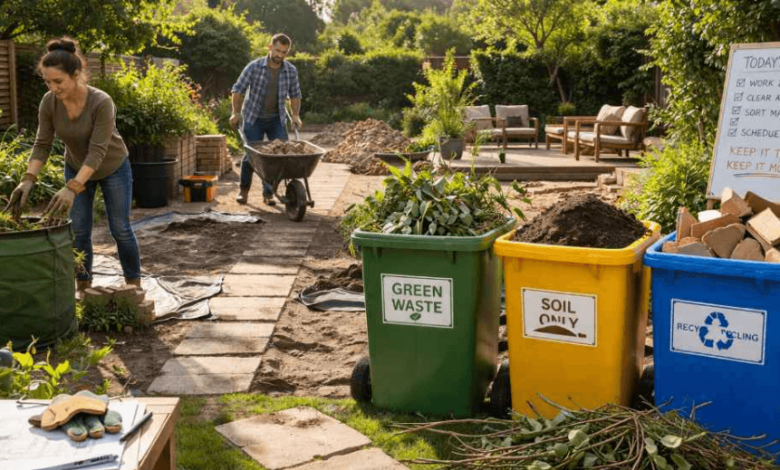
Large backyard makeover projects can completely transform an outdoor space, but they also generate substantial amounts of green waste throughout the process. Tree trimming, shrub removal, sod replacement, garden bed clearing, and landscape redesigns often produce far more organic debris than property owners initially expect. For landscapers, managing this waste efficiently is essential for maintaining productivity, preserving site organization, and keeping projects on schedule.
A well-planned approach to green waste management allows crews to focus on installation and design work rather than constantly dealing with cluttered work areas and overflowing debris piles.
Why Backyard Makeovers Generate Significant Green Waste
Most large landscape renovations begin with removal. Existing shrubs, overgrown vegetation, aging garden beds, unwanted trees, and old ground cover are often cleared before new features can be installed. Even relatively simple redesigns can create large piles of branches, leaves, roots, brush, and organic material.
In addition, grading work and lawn replacement projects frequently generate sod, weeds, and other vegetation that must be removed from the property. Because these materials are bulky rather than dense, they can consume a surprising amount of space very quickly.
Without a disposal strategy, green waste can easily become one of the largest logistical challenges of the project.
Planning for Waste Before Work Begins
Successful landscapers often treat debris management as part of the project plan rather than something that happens after the work is complete. Before clearing begins, crews typically evaluate the amount of vegetation that will be removed and identify where waste will be staged throughout the project.
This planning process helps determine disposal needs and prevents work areas from becoming overcrowded during demolition and site preparation. It also allows crews to maintain better workflow once the renovation is underway.
A proactive approach usually results in a cleaner and more organized project site.
Establishing Centralized Collection Areas
One of the most effective ways to manage green waste is to create a centralized collection area. Instead of allowing branches, brush, and vegetation to accumulate throughout the property, landscapers direct debris to a designated location as it is generated.
Centralized collection helps maintain cleaner work zones and makes it easier to track how much material is accumulating. It also reduces the amount of time spent moving debris later because materials are already consolidated into a single area.
Keeping waste organized from the beginning supports more efficient project operations.
Separating Different Types of Organic Debris
Backyard makeover projects often produce several categories of green waste. Tree limbs, brush, leaves, grass clippings, root systems, and removed plants may all be generated at different stages of the project.
Separating materials whenever practical helps improve organization and simplify removal activities. Larger branches can be grouped together, while lighter vegetation and garden debris can be collected separately.
This approach helps crews work more efficiently and prevents valuable workspace from being overwhelmed by mixed debris piles.
Managing Brush and Shrub Removal
Shrub and brush removal frequently accounts for a significant portion of landscape debris. While individual shrubs may seem relatively small when planted, they often expand into surprisingly large piles once cut down and dismantled.
Landscapers often process brush as it is removed rather than allowing it to spread across the site. Consolidating materials immediately helps preserve access routes and keeps active work areas cleaner.
Continuous management prevents brush piles from interfering with subsequent stages of the project.
Handling Sod and Vegetation Removal
Many backyard transformations involve removing existing turf to make room for new landscaping features. Sod removal can generate substantial amounts of organic material, particularly on larger properties.
Because removed sod is both bulky and heavy, it requires careful planning during collection and disposal. Allowing large piles of sod to remain on-site for extended periods can limit workspace and make movement around the property more difficult.
Regular removal helps maintain momentum during grading and installation activities.
Maintaining Clear Access Routes
Landscape projects require constant movement of workers, equipment, and materials across the property. Green waste can quickly block pathways, staging areas, and equipment routes if it is not managed consistently.
Landscapers often prioritize keeping primary access routes open throughout the project. This improves efficiency and reduces delays caused by navigating around debris piles.
Clear pathways also contribute to safer working conditions for both crews and property owners.
Coordinating Disposal Throughout the Project
Large backyard makeovers often generate waste continuously rather than all at once. Initial clearing produces one wave of debris, while ongoing pruning, grading, and installation activities may generate additional material as work progresses.
Landscapers frequently coordinate disposal activities throughout the project rather than waiting until completion. This helps maintain cleaner conditions and prevents waste from competing with staging areas needed for new materials and equipment.
Ongoing removal supports a more organized workflow from start to finish.
See also: The Business Impact of Strong Restaurant Branding
Working With Waste Removal Providers
Many landscaping contractors coordinate disposal services to help manage the volume of green waste generated during major backyard renovations. Working with providers such as Waste Removal USA alongside local disposal resources can help ensure debris is removed efficiently as the project progresses.
Reliable disposal support allows landscapers to focus on construction and installation activities while maintaining cleaner work environments.
Proper coordination becomes increasingly important on larger and more complex landscape projects.
Supporting Safety and Professional Presentation
Large piles of branches, roots, and vegetation can create tripping hazards and restrict visibility throughout a work site. Consistent green waste management helps reduce these risks while maintaining a more professional appearance.
Homeowners often judge project progress based not only on the work being completed but also on how well the site is maintained during construction. Organized cleanup demonstrates attention to detail and helps build confidence in the landscaping team.
A cleaner site typically contributes to smoother operations and a better client experience.
Managing green waste effectively is a critical part of large backyard makeover projects. Tree removal, shrub clearing, sod replacement, and landscape demolition all generate substantial amounts of organic debris that require ongoing attention.
By planning ahead, establishing centralized collection areas, maintaining clear access routes, and coordinating disposal throughout the project, landscapers can keep renovation sites cleaner, safer, and more efficient. When green waste management is integrated into the overall project strategy, backyard transformations tend to progress more smoothly and deliver better results for both contractors and property owners.