Introduction
Learning how to understand and use electronic parts can feel confusing at first. Many beginners look at wires, small parts, and boards and think it is too complex to try. Yet the truth is that anyone can learn electronics with the right starting point and the right guidance.
Electronic kits make the process easier by giving learners simple projects that show what each part does. These kits allow teens and adults to explore ideas in a safe and clear way. People begin to see how parts connect, how power flows, and how each piece has a purpose.
As learners continue working with electronic circuits, they gain confidence. Over time they learn to make electronics in a calm and steady way. They begin with basic projects and later move toward advanced ideas that use microcontrollers such as Arduino Uno boards and small computers like Raspberry PI devices.
Why Electronic Kits Are a Great Starting Point
Electronic kits offer a guided way to begin learning without feeling lost. Each kit includes the pieces you need and simple instructions that show how parts fit together. This approach removes guesswork and gives learners a clean path into the subject.
Many beginners appreciate that these kits introduce concepts slowly. Instead of facing a large pile of unknown parts, you work with a few items at a time. This makes it easier to learn electronics at a comfortable pace.
Another benefit is that the projects are hands on. People learn best when they try things and see results. When a light turns on or a buzzer sounds, the learner instantly understands that the circuit is working. This is one reason these kits help so many students build electronics with confidence.
Getting Familiar with Electronic Circuits
An electronic circuit is a path that allows electricity to move. Beginners learn this idea early because almost every project uses the same simple rule. Power moves from one point, travels through parts that change or control it, and returns to the starting place.
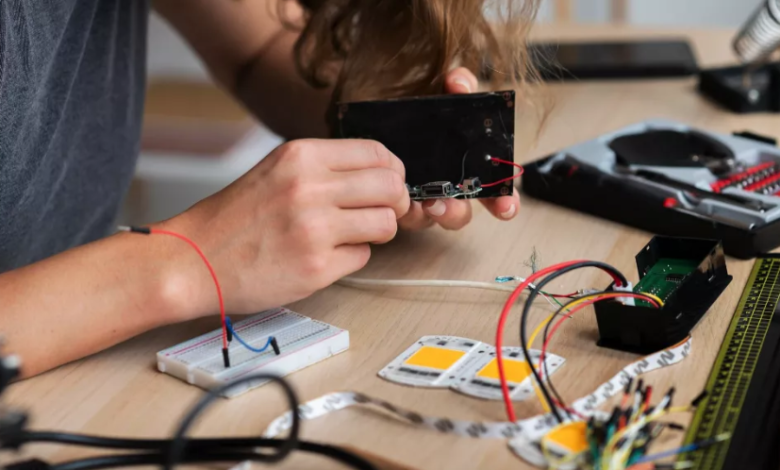
When learners first begin, they practice with very small projects. They might make a simple light that turns on with a switch. They might test a resistor or look at how a sensor reacts to light or sound. With each new project, the idea of electronic circuits becomes easier to understand.
Mistakes are part of the learning process. If a project does not work, the learner checks connections, wires, and parts. This teaches problem solving. Kits allow safe mistakes because the parts are designed for beginners.
Moving from Simple Parts to Complex Ideas
As learners grow more comfortable, they begin to see how larger projects are built from simple pieces. A blinking light is not much different from a more advanced device. The main difference is the number of parts and how they interact.
Many learners begin to explore electronic component packs at this stage. These packs contain common parts such as resistors, capacitors, buttons, sensors, and small motors. They allow students to make electronics without relying only on kit instructions. Instead they start to design their own ideas.
Working with these packs gives learners freedom to test ideas and learn by doing. They begin to understand how different parts affect a circuit. This opens the door to more creative projects.
Understanding How Components Work Together
Each part in a circuit has a purpose. A resistor controls current. A capacitor stores energy. A sensor reacts to light or sound. When learners understand how these parts behave, they can build electronics that respond to the world.
Electronic kits usually include diagrams that explain these roles in simple terms. Over time, these diagrams help learners read circuit drawings with ease. It becomes clear that even advanced projects use familiar ideas.
By practicing with many small circuits, beginners learn to predict how parts will act when combined. This skill makes future projects easier and more enjoyable.
See also: Advantages of Optical TPU Technology for Clear Bra Owners
Building Your First Custom Project
After spending time with guided projects, many learners feel ready to try something on their own. A custom project is a great way to bring everything together. It allows you to plan, test, and adjust your design until it works.
A good beginner idea is a small alarm that uses a sensor to detect light or movement. You can use items from electronic component packs to build this. The project teaches how to connect sensors, create a trigger, and control a small buzzer.
When you build electronic circuits like this, you also learn the value of planning. Drawing your idea first helps you choose parts and understand how the circuit will connect. This practice prepares you for more advanced work later.
Introduction to Microcontrollers
After learners understand basic circuits, they often want to explore microcontrollers. A microcontroller is a tiny computer that can control parts in a circuit. Popular microcontrollers include Arduino Uno boards and Raspberry PI devices.
These tools allow beginners to make electronics that respond to code. Instead of a simple switch, you can write instructions that tell the device what to do. This adds new possibilities such as reading sensors, playing sounds, running motors, or sending data.
Beginners often enjoy this stage because they see how electronics and programming work together. The skills learned from simple kits prepare them for this next step.
Combining Coding with Electronic Circuits
When working with a microcontroller, learners write small programs that control their circuits. These programs decide how parts behave. For example, code can tell a light to blink or tell a sensor to measure temperature.
Electronic kits that include microcontroller parts make this process simple. They often include starter projects that show how to connect the board and write basic commands. These steps guide learners through a new way to build electronics.
As confidence grows, learners can create devices that move, measure, or react to their surroundings. This stage opens many creative paths for both teens and adults.
Growing Your Skills Through Practice
The best way to learn electronics is steady practice. Trying new projects each week helps learners remember what they have studied. Testing different parts, changing designs, and fixing mistakes all build strong skills.
Electronic component packs allow for many experiments. With a variety of parts on hand, learners can explore new ideas without waiting for more supplies. This freedom encourages curiosity and creativity.
Many learners keep a notebook to track their projects. They write down what worked, what failed, and what they learned. This habit supports long term growth.
Preparing for Larger and More Advanced Projects
After practicing with many small projects, learners often feel ready for larger goals. They might want to build a simple robot, a small sensor system, or a light display that uses patterns and color. These projects bring together many skills at once.
By this stage, learners know how to make electronics with confidence. They understand electronic circuits, they can read diagrams, and they can choose the correct parts. This foundation makes any future learning easier.
With continued practice, learners can explore advanced topics such as wireless communication, sensors used in science, or systems powered by renewable energy.
Conclusion
Electronic kits give beginners a clear path into a subject that can seem complex at first. They make it simple to learn electronics and build electronics in a safe and guided way. With patience and regular practice, learners can gain strong skills and move from basic electronic circuits to projects that use advanced tools like Arduino Uno boards and Raspberry PI devices.