Most people’s mental image of Morocco stops at Marrakech — the medina, the souks, Djemaa el-Fna square at dusk. That image isn’t wrong, but it’s incomplete. Two hours south of the city, the High Atlas rises sharply out of the landscape, and the Morocco you find up there is quieter, older, and considerably harder to summarise in a photograph.
The Atlas range stretches 2,500 kilometres through Morocco, Algeria, and Tunisia, divided into the High, Middle, and Anti-Atlas ranges — the traditional homelands of the Amazigh people, known more widely as Berbers. The word “Berber” was given to them by the Romans, derived from “barbarian.” Their actual name for themselves, Amazigh, translates as “free people.” They have been settled in these mountains for over 4,000 years — originally traders, which perhaps explains why their hospitality toward travellers feels so genuinely embedded rather than performed.
That hospitality is one of the things that separates atlas mountains hiking tours from trekking in the Alps or the Pyrenees. The mountain infrastructure here isn’t ski lifts and tourist restaurants. Unlike the Alps, the Atlas offers no cable cars, no congestion, and almost no commercialism. What it does offer is a series of villages where life runs on farming, seasonal rhythms, and the same stone-and-mud-brick architecture it has used for centuries.
The Toubkal Massif
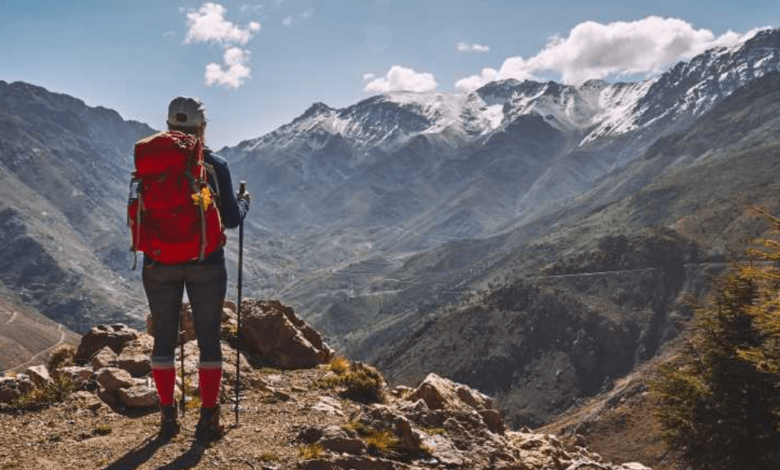
Mount Toubkal stands at 4,167 metres — the highest peak in Morocco, North Africa, and the entire Arab world, sitting about 63 kilometres south of Marrakech. It’s the natural centrepiece of Morocco trekking tours and draws the majority of hikers coming to the High Atlas. The standard two-day ascent starts from the village of Imlil, climbs to the Toubkal Refuge for an overnight stay — a hut originally built in 1938 by the French Alpine Club — before the final push to the summit the following morning.
The route is non-technical between April and October. No ropes, no specialist equipment — just solid fitness and decent footwear. From November through April, the upper mountain is under serious snow and crampons become necessary. The wider area also contains Oukaïmeden, a ski resort just 90 minutes from Marrakech — a detail that surprises almost every visitor who associates Morocco purely with desert heat.
See also: Tailoring Your Space: The Art of Home Customization
What Most Hiking Tours Miss
The Toubkal summit is well-trodden. The valleys surrounding it, less so. Mount Mgoun, the second-highest peak in the Atlas at 4,068 metres — exactly 100 metres lower than Toubkal — receives around 25% fewer visitors. The Ait Bougmez valley beneath it is one of the best-preserved in Morocco: a wide, flat-bottomed valley dotted with traditional villages linked by footpaths, with the M’Goun massif above offering some of the most demanding and rewarding multi-day trekking in the country.
In spring, nomadic Ait Atta tribes move their herds across Mount Mgoun from the south to reach summer pastures — a centuries-old practice of transhumance that experienced trekkers can join over three to four days, with mules carrying supplies alongside the nomads and their herds. It’s genuinely unlike anything available on the more mainstream Toubkal circuit.
Practical Considerations
Spring (March to May) and autumn (September to October) offer the best conditions — temperatures around 20–25°C at altitude, clear skies, and well-defined trails. Summer works at higher elevations but gets hot lower down. Winter above 3,000 metres is a serious undertaking requiring proper mountaineering equipment.
On multi-day Morocco trekking tours, mules carry the bulk of luggage between camps and villages, leaving hikers with just a daypack. Accommodation ranges from village gîtes — family-run with home-cooked tagines and barley soup — to more comfortable kasbahs in the lower valleys. A local guide is strongly recommended for any route beyond the main Toubkal approach: not just for navigation on unmarked high passes, but for the cultural access they provide — arranging village stays, introducing trekkers to families along the route, and adding context that no guidebook can replicate.
adventuro lists hiking and trekking tours across Morocco and the wider world — a practical starting point for comparing itineraries and difficulty levels before booking.
The Atlas Mountains are close enough to fly to on a long weekend but feel genuinely remote within an hour of the trailhead. That contrast — accessible yet wild, familiar yet completely foreign — is what keeps people coming back for more.