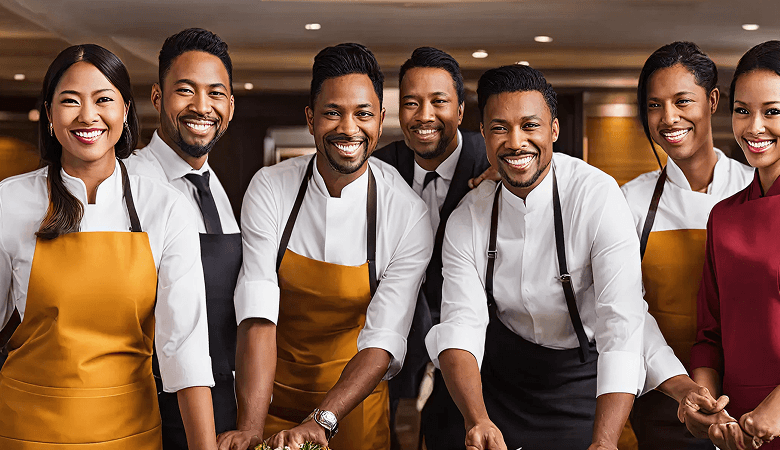
Hospitality has always been about making people feel welcome. But what that means in 2026 is rather different from what it meant a decade ago. A restaurant can be a neighbourhood meeting point, a pub can become a destination for food, and a technology platform can influence where people eat and what they do once they get there. The lines between dining, travel, entertainment, and technology are becoming increasingly blurred.
That makes hospitality an unusually interesting industry to watch. It isn’t shaped by restaurants alone. Chefs, independent businesses, family-run groups, event companies, travel brands, and technology businesses are all having a say in what customers expect when they go out.
And expectations are high. People want good food, of course. They also want somewhere with character, service that feels human, useful technology, memorable surroundings, and, increasingly, a reason to come back. A successful hospitality business isn’t simply selling a meal or a room anymore. It’s creating an experience around it.
Here are some of the people, places and ideas showing what modern hospitality can look like.
1. Keeping Food, Family and Culture at the Centre
Food is one of the clearest ways hospitality connects people with culture, and 805 Restaurants offer a strong example of that idea. The family-owned West African restaurant group has been serving Nigerian and West African food since opening its first restaurant in 2001. Today, its locations span London, Reading, Accra, and Abuja.
The appeal isn’t simply about having another restaurant option on the map. 805 builds its identity around recipes, ingredients, and traditions associated with Nigerian food, including jollof rice, regional soups, beef suya, nkwobi, and its signature Monika Fish. Its own description of the business puts community at the heart of its approach to cuisine.
That matters because hospitality is often at its best when it gives people something they can’t get from a generic experience. Food carries stories. A dish can remind someone of home, introduce a new customer to an unfamiliar cuisine, or bring a group of friends together around a table.
As restaurant groups grow, keeping that sense of identity can be a challenge. 805’s long-running family ownership shows how a hospitality brand can expand while continuing to put food culture and familiarity at the centre of the experience.
2. Independent Ideas Still Matter
Walk through almost any busy town or city and you’ll see the same thing: big hospitality brands sit alongside independent restaurants, cafés, pubs, and bars with their own distinct personalities.
That’s no accident. Customers often seek out places that feel specific to their surroundings. They might remember the unusual room, the handwritten menu, the friendly member of staff, or the dish they haven’t seen anywhere else.
For independent hospitality businesses, character can be one of their greatest assets. A small restaurant doesn’t need to compete with every venue in a city. It needs to give people a reason to choose it.
That could mean focusing on a particular cuisine, building a strong local reputation, or creating an atmosphere that customers associate with the business. In a crowded hospitality market, being recognisable can be just as useful as being everywhere.
3. The Experience Is Bigger Than the Meal
There was a time when choosing a restaurant was mostly about answering one question: what’s on the menu?
Now there are several more. Where is it? What’s the atmosphere like? Is it suitable for a birthday? Can a group fit comfortably? Is there something interesting happening there? Does the venue feel like somewhere you’d want to spend an evening?
This shift towards experience-led hospitality has changed how businesses think about their spaces.
A restaurant might host live events. A pub might develop a serious food offering. A café might become a workspace by day and a social venue in the evening. The strongest businesses understand that customers aren’t always buying one isolated product.
They’re buying time.
That’s a subtle but important distinction. A memorable hospitality experience gives people a reason to stay, talk, explore, and return.
4. Fine Dining
At the more intimate end of the hospitality spectrum, Muse by Tom Aikens demonstrates how a restaurant can build an entire experience around a chef’s personal story.
Located in a Georgian townhouse in Belgravia, Muse is a small, intimate restaurant centred on experience-led fine dining. The restaurant’s tasting menus draw on memories from Tom Aikens’ childhood and culinary career, giving the food a personal narrative rather than treating each dish as an isolated creation.
The restaurant currently has a very limited number of covers, reinforcing that sense of intimacy. Michelin describes the space as having an almost communal feel, while Muse itself presents the restaurant as a journey through pivotal moments in Aikens’ life.
It’s an interesting model because it demonstrates how storytelling can become part of hospitality.
People don’t always remember every ingredient in a tasting menu. They might remember the setting, the conversation, the rhythm of the evening, or the story behind a particular dish.
That’s the point. Great hospitality often gives customers something to talk about afterwards.
5. Places With a Sense of Identity
A hospitality venue doesn’t necessarily need a famous chef or an elaborate concept to stand out.
Sometimes the building does much of the work.
A historic pub with original features can feel completely different from a minimalist new bar. A restaurant tucked inside an old townhouse creates a different mood from one overlooking a busy square. Even the neighbourhood matters.
Location gives hospitality businesses context. A venue becomes part of the story of the area around it.
That’s why the best hospitality spaces often feel connected to where they are. They don’t look as though they could have been picked up and dropped into any other city.
For customers, that sense of place can make a meal feel like part of a day out rather than simply another booking in the diary.
See also: Boosting Business Growth Through Effective Visual Marketing
6. Hospitality Is Becoming More Social
People go out to eat for plenty of reasons, but socialising remains one of the biggest.
That sounds obvious. Yet it’s worth considering what it means for hospitality businesses.
A table for four isn’t just four covers. It’s a birthday, a catch-up, a business conversation, a family occasion, or perhaps a group of friends who haven’t seen one another for months.
This is why restaurants and venues increasingly think about group experiences, private events, flexible spaces, and occasions.
The food still matters enormously. So does the ability to make people comfortable while they’re together.
Hospitality, at its core, is still a people business.
7. Technology Should Make the Experience Easier
Technology has found its way into almost every part of hospitality, from online reservations and digital menus to ordering systems, loyalty programmes, and travel apps.
But the most useful technology tends to be the kind customers barely notice.
Nobody goes to a restaurant because they dream about using a reservation platform. They use one because they want to find a table quickly.
The same principle applies elsewhere. Good hospitality technology removes friction. It helps customers make decisions, navigate unfamiliar places, keep track of plans, and spend more time enjoying the experience.
That becomes particularly interesting when hospitality overlaps with travel.
8. Connecting Travel, Navigation and Food
Ski holidays are a good example of how modern hospitality extends beyond the restaurant or hotel itself. A traveller’s experience begins long before they sit down for dinner.
Piste Mapper is designed around that wider journey. The ski app maps lifts and runs, provides live GPS and turn-by-turn navigation, supports group tracking, and records skiing statistics. It also includes information on food and drink spots within resorts.
That combination is telling.
A ski day isn’t simply about skiing. It’s about knowing where you’re going, staying connected with friends and family, choosing suitable runs, finding somewhere to stop for food, and making the most of limited time on the mountain.
In that sense, Piste Mapper reflects a wider change in hospitality and travel: customers increasingly want experiences to connect rather than exist as separate pieces.
The restaurant, the resort, the journey, and the technology can all become part of the same trip.
9. Personalisation Is Changing Customer Expectations
Customers are also becoming more accustomed to experiences that feel relevant to them.
Think about the difference between being handed a generic list of options and being shown choices that actually suit your needs.
In hospitality, personalisation might be as simple as remembering a regular customer’s preferences. It might involve adapting a menu for dietary requirements or helping a group choose the right type of venue.
The principle is straightforward: people appreciate being understood.
That doesn’t mean every hospitality business needs complicated technology or enormous amounts of customer data. Sometimes personal service does the job perfectly well.
A warm welcome and a member of staff who remembers your name can still beat an automated message.
10. The Future Belongs to Hospitality With a Point of View
The hospitality businesses attracting attention today tend to have something to say.
For 805 Restaurants, that can be expressed through Nigerian food, family recipes, and West African culinary traditions. For Muse by Tom Aikens, it’s personal storytelling and intimate fine dining. For Piste Mapper, it’s the idea that technology can make a ski holiday easier to navigate and more enjoyable.
These businesses operate in very different parts of hospitality. That’s precisely what makes the comparison interesting.
There isn’t one formula for building a successful hospitality brand.
A business can be ambitious or understated. It can focus on fine dining, casual food, travel, events, or technology. What matters is having a clear idea of what experience you’re trying to create.
Customers can usually tell when a business has thought about that.
Where Hospitality Goes Next
The hospitality industry will continue to change, but some fundamentals aren’t going anywhere.
People will still want good food. They’ll still want places where they can meet friends, celebrate milestones, and discover something new. They’ll still remember businesses where they felt genuinely welcome.
What’s changing is everything around those basics.
Restaurants are becoming cultural spaces. Food is becoming part of travel planning. Technology is becoming part of the customer journey. Chefs are using personal stories to shape dining experiences, while established hospitality groups are finding ways to preserve identity as they grow.
Perhaps that’s what makes hospitality so interesting right now. It isn’t one industry with one direction of travel. It’s a collection of people and ideas constantly borrowing from one another.
The restaurant of tomorrow might learn something from a travel app. A travel company might think more like a hospitality brand. A family restaurant might become an international business without losing the recipes that made it special in the first place.
And somewhere between the food, the people, the technology, and the places themselves, the next chapter of hospitality is already taking shape.