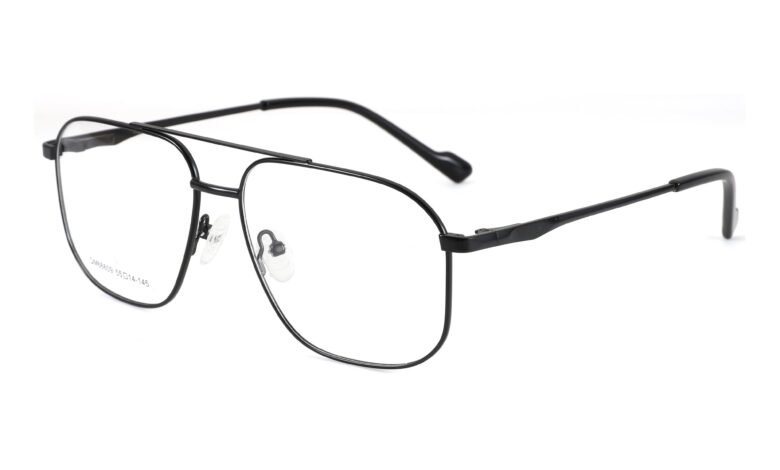
There is a particular moment that arrives for most people somewhere after forty. You hold a takeout menu at arm’s length, tilt it toward the window, and it still refuses to resolve into words. A minute later you glance at a street sign across the road and it is perfectly crisp. Nothing dramatic has happened to your eyes. The natural lens inside each one has simply lost a little of its flexibility, and the close range has quietly drifted beyond reach. The usual first response is a cheap pair of readers tucked into a bag, then a second pair by the bed, then a third abandoned at the office. Before long you are managing a small collection of eyewear and still never holding the right pair at the right moment. Single-vision distance lenses fix one problem and create another. Bifocals handle two distances but announce themselves with a visible line and an abrupt jump between zones. There is a third approach that many people only discover after buying their fourth set of readers, and it behaves differently from all of them.
One Lens That Covers Every Working Distance
A progressive lens carries a gradual change in optical power from top to bottom. The upper portion is set for distance, the middle band handles the arm’s-length zone where computer screens, dashboards, and grocery shelves live, and the lower portion is ground for reading. Between those areas there is no boundary, no line, and no visible seam. The power shifts continuously, which is why the design is called progressive rather than segmented.
The practical consequence is that your eyes do the switching instead of your hands. Looking up brings distance into focus; dropping your gaze slightly finds the intermediate range; tilting your chin up a touch while looking down through the base of the lens brings text into focus. After a while this stops feeling like a technique and starts feeling like ordinary vision, because it closely mirrors how eyes behaved before the near range faded. That is the central appeal of Progressive Prescription Glasses for anyone tired of shuffling between pairs: one set of frames stays on your face from the moment you wake up until you put them down at night.
The trade-off is honest and worth naming. Because the power changes vertically, the far left and far right edges of the lower half carry some blur and mild distortion. This is a consequence of the geometry, not a manufacturing flaw, and it exists in every progressive design regardless of price. What varies is how wide the usable corridor is and how gently the peripheral softness falls away.
Why the First Two Weeks Often Feel Strange
Almost nobody puts on their first pair of progressives and feels immediately at home. The most common early complaints are a slight swimming sensation when turning the head quickly, a sense that the floor is closer than it should be, and having to hunt briefly for the sweet spot when reading. All of this is normal and nearly always temporary.
The brain is learning a new map. It has to associate each vertical eye position with a particular optical power and then suppress the peripheral blur it has decided is irrelevant. That process takes most people somewhere between a few days and three weeks. The fastest route through it is consistent wear. Putting the glasses on for an hour, giving up in frustration, and reverting to old readers restarts the adaptation clock each time and stretches a short adjustment into a long one.
Two habits speed things up considerably. First, move your head rather than your eyes when scanning across something wide, such as a spreadsheet or a bookshelf. Pointing your nose at what you want to see keeps you inside the clear central corridor. Second, hold reading material a little higher and closer than you did with readers, so your gaze naturally falls through the reading zone rather than fighting for it. If discomfort persists past a month, or if one specific distance never sharpens, that is a signal to return to the optician rather than something to endure.
Frame Shape Does Real Optical Work
With single-vision lenses the frame is almost purely a style decision. With progressives it becomes part of the optics. The lens needs enough vertical depth to fit the distance zone, the intermediate corridor, and the reading area without compressing any of them. Very shallow frames, the sort with a narrow letterbox shape, squeeze all three regions into a small space, which makes the transitions steeper and the reading zone harder to land on.
Depth is not the only factor. How the frame sits matters just as much. Glasses that slide down the nose during the day move the reading zone below where your eyes are looking, which is why people who complain that their progressives “stopped working by the afternoon” are usually describing a fit problem rather than a lens problem. A slight forward tilt at the bottom of the frame, adjustable nose pads, and temples that grip without pinching all help hold the optical design in the position it was designed for. Brands with broad frame ranges, ZENOTTIC among them, generally make it easier to find shapes with adequate lens height, which removes one of the most common causes of early dissatisfaction.
It is worth trying frames on with the lens area in mind rather than only the outline. Ask where the bottom rim would sit relative to your lower eyelid and whether there is room beneath your pupil. That single question eliminates a surprising number of otherwise appealing options.
Measurements Decide Whether They Feel Right
Progressive lenses are cut to the individual, not just to the prescription. Beyond the usual sphere, cylinder, and axis values, the lab needs to know exactly where your pupils sit inside the chosen frame, both horizontally and vertically. If the corridor is placed a couple of millimetres too high or too low, you end up looking through the wrong power at every distance and the lens never settles.
Getting this right means having the measurements taken while wearing the actual frame you intend to buy, in your normal posture, looking straight ahead at natural head position. Slouching, tilting the chin, or leaning toward the measuring device all shift the result. Two further details help: mention what you spend most of your day doing, and mention your dominant working distance. Someone who spends eight hours on two monitors needs a different balance from someone who reads paper documents and drives long distances. This is the part of the process where being specific pays off far more than choosing a premium lens name, and it is also where online purchases require care, since accurate pupil height is difficult to self-measure. If you are ordering remotely, follow the measurement guidance closely and keep the option to have the fit checked afterwards.
The Desk Is the Hardest Room in the House
Computer work is where progressives are most often criticised, and the criticism usually has a fixable cause. A monitor placed high forces you to read through the distance zone at the top of the lens, which is the wrong power for that range. The instinctive correction is to tilt your head back, and hours of that produces neck and shoulder ache that gets blamed on the glasses.
The fix is to move the screen rather than the head. Lowering the monitor so the top of the display sits at or slightly below eye level puts the intermediate corridor exactly where it needs to be, and tilting the screen back a few degrees keeps the whole surface inside that band. Pulling the monitor to roughly an arm’s length away also helps, since the intermediate zone is tuned for about that distance. Laptop users often do better with an external keyboard and a small riser, because a laptop screen sits low and close, which pushes reading into an awkward corner of the lens. For people who spend the majority of the working day at a desk, a second pair optimised for the intermediate and near range is a reasonable addition rather than an admission of defeat, though most wearers find a well-fitted progressive plus a properly positioned monitor is enough.
Stairs, Curbs, and the Driver’s Seat
The two situations that unsettle new wearers most are descending stairs and stepping off a curb. Looking down through the reading portion of the lens magnifies and shifts the apparent position of the ground, so the first step can feel unexpectedly close or oddly angled. The remedy is simple and becomes automatic quickly: lower your chin and look through the upper part of the lens when you need to judge distance beneath you, rather than dropping only your eyes. Holding a handrail for the first few days while the habit forms is sensible.
Driving tends to be the pleasant surprise. The distance zone handles the road, the intermediate band brings the dashboard and mirrors into focus without a change of glasses, and glancing down at a phone mount or a printed address is possible in a way that single-vision distance lenses do not allow. Mirrors are worth a moment’s practice in a parked car, because side mirrors sit toward the lens periphery where some softness lives, and turning the head slightly rather than only glancing sideways brings them into the clear zone.
Vision That Keeps Up With the Whole Day
The appeal of a progressive lens is not novelty but continuity. Rather than dividing the day into distance tasks and close tasks, each with its own pair of glasses waiting somewhere else in the house, you get a single lens that follows your gaze through the ranges you actually use. That convenience is real, and for most people it becomes invisible within a few weeks, which is exactly the point.
Reaching that stage depends less on which lens you choose than on three practical things. Pick a frame with enough vertical depth and make sure it sits securely so it does not slide during the day. Have your pupil position measured carefully in the frame you will actually wear, and describe your real working distances while you are there. Then commit to wearing the glasses full time through the adjustment period instead of retreating to old readers when something feels off. Get those three right and the lens does what it was designed to do: hold your world in focus from the page in your hands to the horizon beyond the window, without you thinking about it at all.