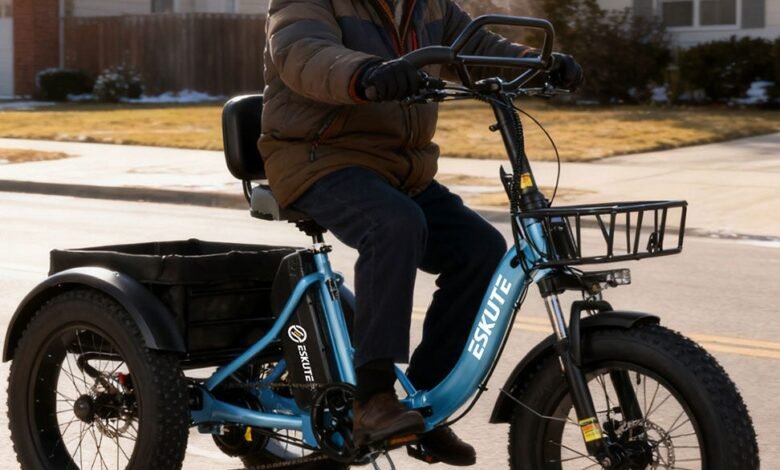
Urban commuters face a daily gauntlet of gridlocked streets, rising fuel prices, and public transit costs that seem to climb every year. The average American spends over $10,000 annually on car-related expenses alone — a figure that’s pushing many people to rethink how they get from point A to point B. Enter the electric tricycle for adults: a practical, stable, and increasingly popular alternative that’s reshaping how people navigate city life.
Unlike traditional bicycles or standard e-bikes, electric tricycles offer a unique blend of stability, cargo capacity, and motor-assisted ease that appeals directly to adult commuters who want reliability without the physical strain. Whether you’re dealing with a bad knee, carrying groceries, or simply tired of circling the block for parking, these three-wheeled machines are worth a serious look.
This article explores why electric tricycles are gaining momentum among daily commuters, how they stack up against other affordable e-bike options, and what practical steps you can take to make one part of your everyday routine. If cost savings and stress-free commuting are your goals, read on.
The Rise of Electric Tricycles in Urban Commuting
Not long ago, the electric bicycle felt like a novelty — something you’d spot occasionally on a bike path and do a double-take. Today, e-bikes are mainstream, and the next evolution is already underway. Electric tricycles for adults are moving from niche curiosity to genuine commuter staple, and the numbers back it up. The global electric tricycle market is projected to surpass $16 billion by 2030, driven largely by urban adults seeking smarter, more sustainable ways to get to work.

This shift didn’t happen overnight. As cities grew more congested and the limitations of traditional cycling became apparent — physical exhaustion, balance concerns, limited cargo space — riders began looking for something more practical. Two-wheeled e-bikes addressed the effort problem but left stability and carrying capacity largely unsolved. Three-wheeled electric alternatives stepped in to fill that gap, particularly for commuters over 40 who want confidence on the road without sacrificing speed or convenience.
Adoption is accelerating across age groups and geographies. European cities like Amsterdam and Copenhagen, long ahead of the curve on cycling infrastructure, have seen sharp upticks in electric tricycle registrations. Meanwhile, American commuters in mid-sized cities are increasingly turning to them as car replacement vehicles for short to medium distances. The trend matters because it signals a broader cultural shift — away from the default assumption that commuting requires a car, and toward a more flexible, cost-aware approach to daily travel.
Solving Commuter Needs: How Electric Tricycles Reduce Costs and Ease Traffic
Reducing Commuting Costs with an Electric Tricycle
The financial case for switching to an electric tricycle is hard to ignore. Where a car demands fuel, insurance, registration, parking fees, and routine maintenance, an electric tricycle requires only occasional battery charging — typically costing just cents per mile — and basic upkeep like tire checks and brake adjustments. Annual operating costs for an e-trike often fall under $500, compared to the thousands most drivers spend without a second thought. Even stacked against public transit, the math favors the tricycle once you factor in monthly pass costs and the time lost waiting for delayed buses or trains.

Compared to other affordable e-bikes, electric tricycles hold their own on value. While a quality commuter e-bike might run slightly less upfront, the added stability, cargo capacity, and reduced physical effort of a three-wheeled model often justify the difference — especially for riders who’d otherwise need a car for grocery runs or carrying work equipment. Over a two-year period, many commuters report recovering the full purchase cost simply through eliminated parking fees and fuel savings alone.
Navigating City Traffic Effortlessly
Three wheels fundamentally change the commuting experience in dense urban environments. Unlike two-wheeled commuter e-bikes that demand constant balance adjustments in stop-and-go traffic, an electric tricycle stays upright on its own — a genuine advantage when you’re inching through intersections or waiting at red lights with a loaded cargo basket. For adults over 40, or anyone managing joint issues or recovering from injury, this stability removes a significant mental and physical barrier to daily cycling.
Motor assistance amplifies the benefit. With pedal-assist engaged, riders can maintain a steady pace through urban corridors without arriving at work sweaty or exhausted. Most electric tricycles allow access to bike lanes, letting commuters bypass gridlocked car traffic entirely and cut travel times considerably. The wider stance does require some adjustment on narrow paths, but for the majority of city routes, the three-wheel design proves more confidence-inspiring than limiting — making it a practical daily driver for adults who want predictability and ease on every commute.
Electric Tricycle vs. Other E-Bikes: A Comparison for Commuters
When weighing commuting options, the choice between an electric tricycle and a standard two-wheeled e-bike comes down to what you actually need from your daily ride. Commuter e-bikes are nimble, lightweight, and easier to store in tight spaces — genuine advantages for apartment dwellers or those navigating narrow bike racks. But for adults who prioritize stability, carrying capacity, and low physical demand, the electric tricycle makes a compelling case that a two-wheeler simply can’t match.
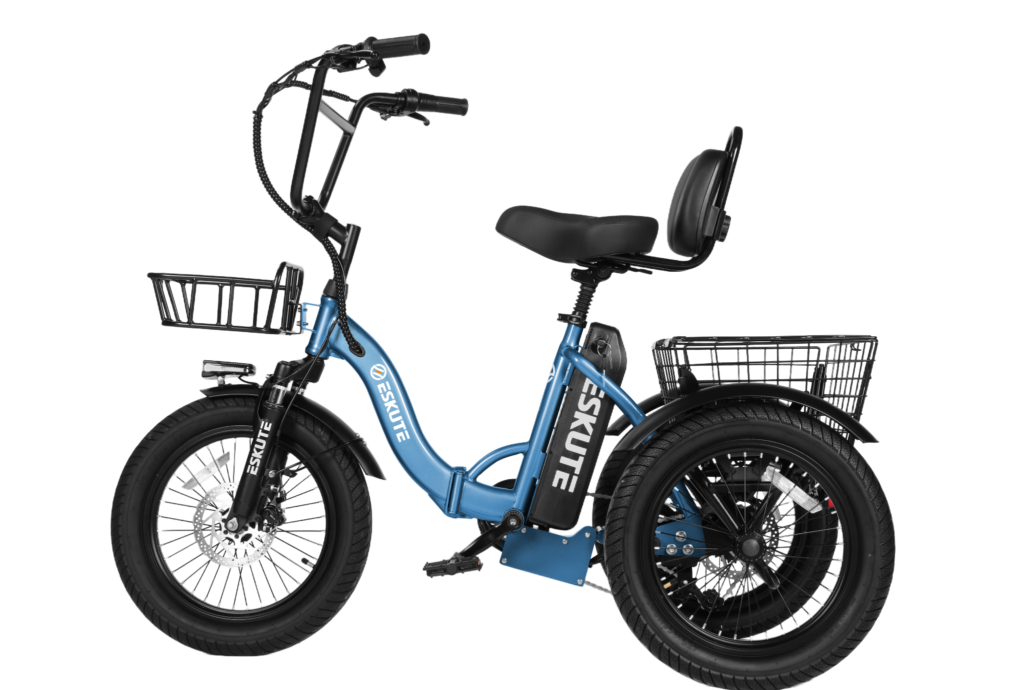
The most obvious differentiator is balance. A traditional commuter e-bike requires the rider to manage equilibrium at all times, which becomes taxing in heavy traffic, on uneven pavement, or when carrying a loaded bag. An electric tricycle eliminates that entirely. You stop, you stay upright — no foot-down scramble, no wobble. For older adults or anyone with balance concerns, this isn’t a minor convenience; it’s the deciding factor.
Cargo capacity is another area where tricycles pull ahead. Most electric tricycles come equipped with a rear basket or cargo platform capable of handling substantial loads — groceries, work gear, even a small pet carrier — without affecting ride stability. Standard e-bikes can accommodate panniers or a rear rack, but weight distribution becomes a real concern once you’re hauling anything significant. The three-wheel platform handles it naturally.
Speed and portability favor the two-wheeled e-bike. If your commute involves tight bike storage, frequent stair navigation, or long stretches where agility matters more than cargo, a commuter e-bike remains the sharper tool. But for adults commuting moderate distances through mixed urban terrain who want a reliable, low-stress ride day after day, the electric tricycle’s stability and utility make it the more practical long-term investment.
Affordable E-Bike Solutions: Spotlight on ESKUTE and Other Brands
For commuters serious about making the switch, brand selection matters as much as vehicle type. ESKUTE has carved out a strong reputation in the affordable e-bike space by delivering reliable, well-equipped models at price points that undercut many competitors without sacrificing build quality. Their lineup spans commuter e-bikes and cargo-oriented designs, making them a practical starting point for adults evaluating their first electric ride. User reviews consistently highlight battery longevity and responsive motor assist as standout qualities — exactly what daily commuters need from a machine that earns its keep every morning.
What makes ESKUTE particularly appealing to cost-conscious buyers is the value density of their offerings. You’re not paying a premium for brand prestige; you’re paying for functional components that hold up under regular use. Integrated lighting, sturdy frames, and intuitive pedal-assist systems come standard across much of their range, removing the need to spend extra on aftermarket upgrades that other budget brands often leave out.
Beyond ESKUTE, brands like Addmotor, Viribus, and Schwinn have built credible electric tricycle lineups aimed squarely at adult commuters. Addmotor, in particular, has gained traction among older riders for its stable, cargo-ready three-wheel designs with strong motor output. Viribus appeals to urban riders prioritizing compact footprints, while Schwinn leverages decades of cycling trust to attract first-time e-bike buyers who want familiarity alongside modern tech. Shopping across these brands gives commuters a realistic picture of what’s available at accessible price points — and makes clear that choosing an affordable e-bike no longer means settling for an underpowered or unreliable ride.
Step-by-Step Guide to Adopting an Electric Tricycle for Commuting
Making the switch to an electric tricycle starts with an honest assessment of your commute. Map out your daily route and note the distance, terrain, and any storage constraints at your workplace. If your commute runs under 15 miles each way and includes bike-accessible roads or lanes, an electric tricycle is almost certainly a viable replacement for your car or transit pass. Also consider what you typically carry — laptops, groceries, gym gear — since cargo needs will influence which model suits you best.
Once you’ve defined your requirements, narrow your model selection around three criteria: motor power, battery range, and frame stability. For hilly urban terrain, prioritize a motor rated at 500W or higher. For longer commutes, look for a battery that comfortably exceeds your round-trip distance to avoid range anxiety. Test ride if possible — many local e-bike dealers carry electric tricycles, and the feel of the ride matters as much as the spec sheet.
Before your first commute, invest in proper safety setup: a well-fitted helmet, front and rear lights if not already integrated, and a sturdy lock rated for urban theft risk. Plan your route in advance using a cycling map app to identify dedicated bike lanes and avoid roads with heavy truck traffic or poor pavement. Start with a weekend trial run to build confidence before committing to weekday use.
For daily maintenance, keep a simple weekly routine: check tire pressure, inspect brake responsiveness, and charge the battery after each use rather than letting it fully deplete. This habit alone extends battery life significantly and ensures your tricycle is always ready for the morning commute without surprises.
Why Electric Tricycles Are the Smart Choice for Adult Commuters
Electric tricycles for adults have moved well beyond novelty status. They represent a genuinely practical response to the real pressures urban commuters face — rising costs, congested roads, and the physical toll of daily travel. As this article has shown, the case for making the switch is built on concrete advantages: dramatically lower operating costs compared to cars and public transit, the confidence-building stability of a three-wheel design, and cargo capacity that handles real-world hauling needs without breaking a sweat.
The comparison with standard commuter e-bikes makes clear that electric tricycles aren’t just a variation on a theme — they serve a distinct need, particularly for adults who want reliability and ease above all else. Brands like ESKUTE, Addmotor, and others have made this technology accessible without forcing riders to compromise on quality, removing one of the last remaining barriers to adoption.
The trend is real, it’s accelerating, and it’s being driven by practical people making smart financial and lifestyle decisions. If your daily commute involves moderate distances, urban traffic, and a desire to stop hemorrhaging money on car expenses or transit passes, an electric tricycle deserves serious consideration. Start by mapping your route, defining your cargo needs, and test riding a model that fits your terrain. The commute you’ve been tolerating could become one you actually look forward to.