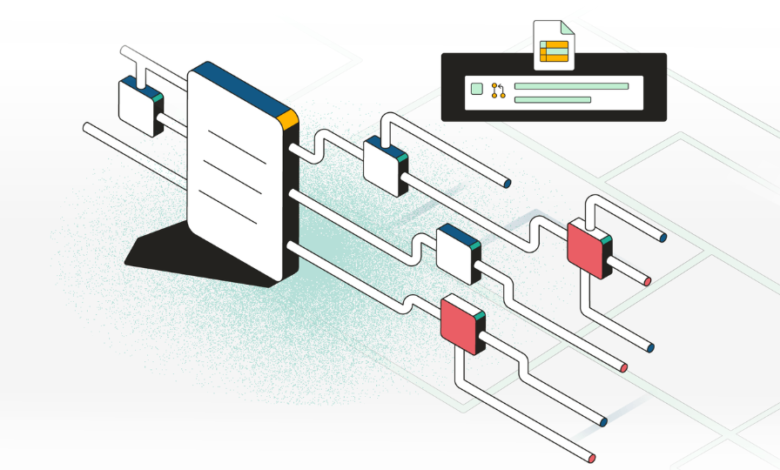
Effective enterprise governance depends on knowing where data comes from, how it moves, and how it transforms. Data lineage provides that visibility. It traces the origin, processing steps, and destinations of data across an organization’s systems, enabling confident decision-making, accurate reporting, and rapid incident response. Mastering lineage is not merely a technical exercise; it is a governance imperative that aligns data producers, stewards, and consumers around shared truths.
Why data lineage matters for governance
Data lineage is the connective tissue between policy and practice. When regulators ask for proof of data provenance or auditors probe the integrity of financial reports, lineage supplies the evidentiary chain. Lineage exposes dependencies that can reveal single points of failure, redundant processes, or unauthorized transformations. For data teams, it accelerates troubleshooting by pinpointing upstream causes of quality issues, while for business stakeholders it provides context that turns raw numbers into trustworthy insights. Ultimately, lineage reduces risk by making the lifecycle of each critical dataset transparent and repeatable.
Building a practical lineage strategy
A practical lineage strategy begins with scope and purpose. Identify the data domains that carry the greatest regulatory, financial, or operational risk and focus initial efforts there. Establish clear ownership for datasets and define the lineage granularity required for each use case, whether that’s system-to-system mapping, field-level transformations, or algorithmic model inputs. Automation should be a priority: manual mapping quickly becomes obsolete in complex environments. Embed lineage capture into data pipelines and orchestration layers so that lineage evolves with the systems it documents. Standardize naming conventions, transformation documentation, and tagging policies to ensure lineage artifacts are consistent and searchable.
See also: Upgrade Flooring to Attract Potential Home Buyers
Choosing the right tooling and integration
Selecting tools for lineage requires balancing depth, scalability, and usability. Some platforms emphasize automated extraction from code, SQL, and ETL metadata, while others rely on instrumentation of data flows or integration with orchestration frameworks. The best implementations combine automated harvesting with a governance layer that allows analysts to enrich and correct lineage records. Integrations with data catalogs, access control systems, and reporting tools amplify the value of lineage by connecting provenance to policy enforcement and metadata-driven workflows. Thinking about lineage as part of a broader catalog and stewardship ecosystem will yield better adoption and sustainability. Consider, for example, linking lineage capture to enterprise metadata management practices so that provenance is discoverable alongside business context and data quality metrics.
Governance practices and organizational roles
Lifecycle governance of lineage requires clear roles and responsibilities. Data stewards validate lineage accuracy and reconcile discrepancies. Data engineers automate capture and maintain APIs that surface lineage to downstream consumers. Compliance and privacy teams map lineage to retention and masking policies so that controls can be consistently applied. Executive sponsors set priorities and secure investment, while cross-functional committees adjudicate standards and exceptions. Regular audits of lineage completeness and accuracy should be part of governance cadence, with findings driving continuous improvement. Training is also essential: when business users understand what lineage delivers, they are more likely to contribute annotations and attestations that enrich the governance record.
Addressing common challenges
Enterprises typically face several recurring challenges when implementing lineage. Heterogeneous systems and legacy applications resist automated extraction, requiring hybrid approaches that combine scripts, connectors, and manual inputs. Transformations performed in code or embedded in third-party tools can obscure logic unless instrumentation or standardized interfaces are introduced. Data lakes and streaming architectures complicate lineage due to transient states and complex event processing; here, instrumenting producers and sinks and capturing checkpoint metadata becomes important. Privacy concerns demand that lineage capture avoid storing sensitive payloads while still preserving enough context for governance. Tackling these issues requires a pragmatic roadmap that balances quick wins with longer-term platform investments.
Measuring success and operationalizing lineage
Success metrics for lineage programs should tie back to governance objectives. Measure the reduction in mean time to resolution for data incidents, improvements in report trust scores from business users, and the percentage of regulated datasets with complete, validated lineage. Track adoption indicators such as the number of annotations contributed by domain teams and the frequency with which lineage is consulted during change reviews. Operationalizing lineage means embedding it into change management, deployment pipelines, and policy enforcement. When lineage feeds automated impact analyses for proposed changes, teams can make informed decisions without manual dependency discovery. Over time, the organization should shift from reactive audits to proactive governance guided by lineage insights.
Next steps for leaders
For leaders looking to elevate governance, begin with a pilot that demonstrates tangible benefits in a high-value domain. Define success criteria clearly, choose a small set of datasets for intensive coverage, and instrument the relevant sources and transformations. Use pilot results to build a business case for broader rollout and to refine standards. Communicate wins to stakeholders and provide tooling that reduces friction for contributors. As lineage matures into a trusted source of truth, it becomes a foundation for more advanced capabilities like impact-based testing, regulatory automation, and model governance.
Data lineage is both a technical capability and a governance discipline. When implemented thoughtfully, it turns opaque processes into auditable pathways, lowers operational risk, and strengthens the credibility of analytics across the enterprise. Mastery of lineage emerges from focused scope, integrated tooling, clear roles, and metrics-driven governance—yielding a resilient foundation for reliable decision-making and regulatory compliance.