Introduction
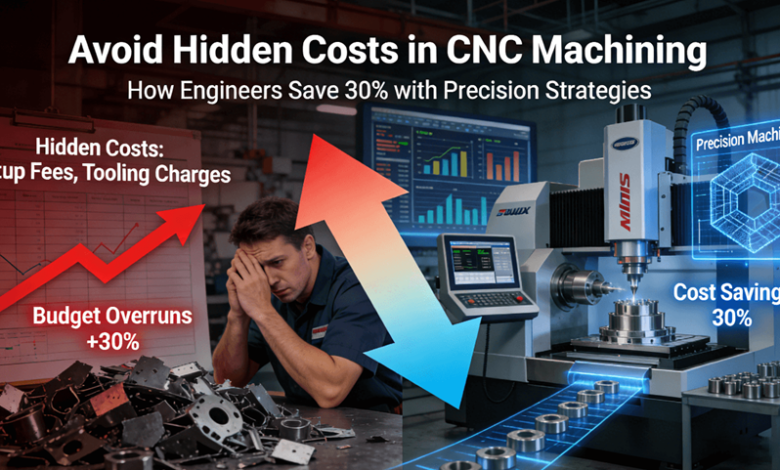
In today’s competitive manufacturing landscape, engineers and procurement managers frequently face unexpected cost overruns in CNC machining projects. Hidden expenses — such as setup fees, design modification charges, and tooling costs — can inflate budgets by over 30%, undermining project viability. Traditional costing methods often lack transparency, failing to account for critical variables like machine efficiency and material selection.
This article addresses these challenges by dissecting the core factors influencing CNC machining expenses and presenting a systematic approach to cost control. Through real-world case studies and data-driven strategies, we demonstrate how manufacturers can achieve significant savings while maintaining quality. By optimizing design, leveraging advanced technologies, and adhering to certified processes, engineers can transform cost management from a reactive burden into a proactive advantage.
What Factors Directly Influence CNC Machining Costs Per Hour?
Understanding the variables that drive hourly rates is essential for accurate budgeting. CNC machining costs per hour vary widely based on equipment, materials, and operational factors, directly impacting project feasibility.
1. Machine Type and Technological Capability
The choice between 3-axis and 5-axis CNC systems significantly affects hourly rates. While 3-axis machines typically charge $50–$100 per hour, 5-axis equipment may cost $120–$200 due to higher precision and versatility. However, 5-axis machining often reduces total project time by enabling single-setup operations, leading to overall savings. For instance, a complex aerospace component requiring multiple setups on a 3-axis machine might incur 20% higher labor costs compared to a 5-axis alternative. The technological capability directly influences the machining efficiency and final cost structure.
2. Material Properties and Machinability Challenges
Material costs account for up to 40% of total expenses, with hardness influencing machining time and tool wear. For example, titanium alloys demand slower cutting speeds and specialized tools, increasing hourly costs by 25–50% compared to aluminum. Engineers must balance material properties with budget constraints, opting for cost-effective alternatives like 6061 aluminum for non-critical applications without compromising performance. The machinability index of different materials plays a crucial role in determining the final per-hour expenditure.
3. Production Volume and Operational Efficiency
Batch size plays a pivotal role; small-scale prototypes face higher per-unit costs due to setup charges, while mass production spreads fixed costs across units. According to NIST data, optimizing production volumes can reduce hourly burdens by 15–30%. Additionally, automated labor scheduling minimizes idle time, further enhancing cost efficiency. The relationship between volume and hourly rate optimization requires careful analysis for maximum savings.
How Can Manufacturers Calculate CNC Machining Expenses Accurately?
Precise cost calculation prevents budget overruns by integrating all variables into a transparent formula. Accurate expense forecasting relies on granular data and standardized methodologies.
- Comprehensive Cost Calculation Methodology: The fundamental equation — Total Cost = (Machine Time × Hourly Rate) + Material Cost + Setup Fees — must include often-overlooked elements like tooling and energy consumption. For instance, a project requiring 10 hours at $100/hour, with $200 in material and $150 in setup, totals $1,350. Underestimating setup fees by 20% could lead to a $270 overspend, highlighting the need for comprehensive quotes. A detailed understanding of cost components is essential for accurate budgeting.
- Quality Systems and Cost Predictability: Certifications like ISO 9001 enforce rigorous process controls, reducing errors that inflate costs. By implementing standardized costing templates, certified suppliers ensure consistency. A study linking ISO 9001 adherence to 15% lower rework rates demonstrates how quality systems directly enhance financial predictability. The integration of quality management into costing processes ensures reliable budgeting and prevents unexpected expenses.
- Practical Implementation and Case Analysis: A medical device manufacturer saved 22% by adopting a detailed costing model that factored in design complexity. Initially quoting $5,000 based solely on machine time, the revised estimate of $6,100 included DFM adjustments, preventing a $1,100 deficit. This underscores the value of holistic calculation methods and thorough expense analysis in project planning.
What Are the Key Differences Between 3-Axis and 5-Axis Machining in Cost Efficiency?
Choosing between 3-axis and 5-axis technologies involves trade-offs in precision, time, and cost. Long-term cost efficiency depends on project complexity and volume.
1. Investment Analysis and Operational Economics
While 5-axis machines command higher hourly rates ($150–$200 vs. $50–$100 for 3-axis), their ability to complete parts in one setup reduces labor and fixture costs by up to 40%. For high-complexity items like turbine blades, 5-axis machining cut total time from 12 to 6 hours, yielding a 30% cost reduction despite the premium rate. The investment payback period must be carefully evaluated for each project scenario.
2. Precision Engineering and Error Reduction
3-axis systems require multiple setups, introducing cumulative errors that necessitate rework. In contrast, 5-axis technology maintains a single datum, adhering to ASME Y14.5-2018 tolerances and minimizing scrap. For a batch of 100 parts, this precision avoided $5,000 in rejections, justifying the higher initial expense through improved quality outcomes and reduced waste.
3. Production Flexibility and Application Scope
For prototyping, 3-axis machining offers lower entry costs, but 5-axis excels in scaling production. An automotive supplier reported 35% faster iteration cycles for complex geometries using 5-axis systems, highlighting their superior ROI for high-mix applications. The choice between technologies should consider both current needs and future scalability requirements.
How Does Part Design Complexity Impact Overall CNC Machining Budgets?
Design decisions directly dictate machining time and resource allocation. DFM principles are critical for aligning aesthetics with economy.
1. Tolerance Specification and Cost Implications
Tighter tolerances (e.g., ±0.01 mm) demand slower speeds and additional passes, increasing costs by 20–50%. For example, a component with IT7 tolerance required 25% more time than IT9, adding $300 per unit. Simplifying tolerances where feasible can yield substantial savings without compromising functionality. Understanding the cost-tolerance relationship is crucial for budget optimization.
2. Geometric Optimization Strategies
Complex features like deep cavities or undercuts necessitate specialized tools and longer paths. A redesign consolidating multiple parts into one reduced machining time by 15%, underscoring how simplified geometries cut costs without compromising function. Implementing design optimization early in the process maximizes cost efficiency.
3. Material Utilization Efficiency
Optimized nesting and toolpaths minimize waste; software simulations have shown 10% material savings for complex designs. By prioritizing DFM, engineers can reduce scrap rates and associated expenses. Effective material management contributes significantly to overall cost reduction in machining operations.
What Strategies Can Reduce Hidden Costs in CNC Machining Projects?
Proactive measures identify and mitigate hidden expenses early in the project lifecycle. Transparent supplier partnerships are key to avoiding surprises.
1. Early Engagement and DFM Implementation
Engaging suppliers during the design phase helps identify cost drivers. A case study where DFM feedback eliminated unnecessary features saved 18% on tooling and time. Platforms offering instant CNC machining quotes with integrated DFM checks enhance this process. Early collaborative planning prevents costly changes later in the project.
2. Tooling Management and Process Optimization
Standardizing tooling reduces custom fees; one manufacturer cut costs by 25% by reusing fixtures across projects. Additionally, preventive maintenance schedules extend tool life, lowering per-part expenses. Implementing efficient tooling strategies is essential for long-term cost control.
3. Supply Chain Transparency and Documentation
Choosing suppliers with detailed breakdowns — such as those providing itemized quotes — prevents hidden charges. A procurement team reduced overruns by 30% by partnering with transparent vendors aligned with ISO 9001 standards. Comprehensive cost documentation ensures budget accountability throughout the project lifecycle.
How Do Certifications Like ISO 9001 Ensure Cost-Effective and Quality CNC Machining?
Certifications validate processes that enhance efficiency and reduce variability. Standardized workflows underpin both quality and cost control.
- Process Standardization and Error Reduction: ISO 9001-certified facilities document every step, minimizing deviations that cause rework. Data shows a 20% reduction in errors compared to non-certified shops, directly lowering costs. For regulated industries, this translates to predictable budgets and consistent quality outcomes.
- Continuous Improvement Systems: Certifications mandate traceability systems that track materials and processes, enabling root-cause analysis. An aerospace supplier used AS9100D compliance to cut waste by 15%, demonstrating how rigorous standards drive savings. The implementation of continuous improvement processes ensures ongoing cost optimization.
- Risk Management and Supplier Qualification: Working with certified partners like those holding IATF 16949 ensures adherence to best practices. A study linked certification to 25% fewer project delays, highlighting its role in cost predictability. Proper supplier qualification based on certifications mitigates project risks and ensures reliable delivery.
Conclusion
By systematically addressing cost drivers — from machine selection and design optimization to certification-backed processes — engineers can avoid hidden expenses and achieve savings of up to 30%. Embracing strategic cost management transforms CNC machining services from a cost center into a value-added activity. As technologies evolve, integrating smart factory principles and DFM will further enhance efficiency, ensuring projects remain on budget and on schedule.
FAQs
Q: What is the average CNC machining cost per hour?
A: The hourly rate typically ranges from $50 to $200, depending on machine type and material. For accurate pricing, factors like complexity and volume must be evaluated. Transparent quotes based on real-time data are essential.
Q: How can I reduce CNC machining costs without compromising quality?
A: Optimize part design for manufacturability, choose cost-effective materials, and leverage high-volume production. Implementing DFM principles and working with certified suppliers can cut costs by up to 30%.
Q: What is the cost difference between 3-axis and 5-axis CNC machining?
A: 3-axis machines have lower hourly rates but may require multiple setups, increasing time. 5-axis machining reduces setup costs and improves efficiency for complex parts, often yielding long-term savings despite higher initial rates.
Q: How do I get a reliable CNC machining quote?
A: Provide detailed drawings, material specs, and quantity requirements. Reputable suppliers use automated systems for instant quotes, ensuring transparency. Platforms that integrate DFM analysis enhance reliability.
Q: Why are certifications important in CNC machining cost control?
A: Certifications like ISO 9001 ensure standardized processes, reducing errors and rework. This leads to predictable costs and higher quality, as seen with suppliers adhering to international standards.
Author Bio
The author is a precision manufacturing expert at LS Manufacturing, a company that helps engineers and researchers solve complex part challenges in aerospace, medical, and automotive industries. With certifications such as IATF 16949 and AS9100D, the team ensures high-quality solutions through advanced technologies. For more insights, contact them today for a free, no-obligation project review and DFM analysis. Turn your concept into a cost-effective reality.