Every parent knows the joy of holding their baby close, but that precious bonding time shouldn’t come at the cost of chronic back pain. If you’ve found yourself wincing after carrying your little one or reaching for pain relief at the end of each day, you’re not alone. Thousands of parents struggle with back discomfort caused by improper carrying techniques and poorly designed baby carriers.
The good news is that modern baby carriers have evolved far beyond simple slings. Today’s best carriers incorporate advanced ergonomic features specifically designed to protect your spine and distribute your baby’s weight evenly across your body. This article explores the most effective baby carriers for parents dealing with back pain, focusing on essential features like lumbar support and weight distribution. Whether you’re a new parent preparing for your first baby or an experienced caregiver seeking relief from existing back issues, you’ll discover practical solutions to keep both you and your baby comfortable during those precious carrying moments.
Introduction to Baby Carriers
Baby carriers have transformed the parenting experience by allowing caregivers to keep their infants close while maintaining freedom of movement. These wearable devices secure your baby against your body, creating an intimate bond while freeing your hands for daily tasks. Beyond convenience, quality baby carriers offer significant health benefits for both parent and child. They promote proper hip development in infants through ergonomic positioning and provide crucial support for parents’ backs and shoulders. Modern carriers come in various styles including wraps, slings, soft-structured carriers, and mei tais, each designed to accommodate different ages, weights, and carrying preferences. For parents experiencing back pain, choosing the right carrier becomes especially important as it can mean the difference between comfortable bonding time and ongoing physical discomfort that affects daily life.
Top Features to Look for in a Baby Carrier
Selecting a baby carrier that protects your back requires understanding which features truly make a difference. Effective lumbar support stands as the cornerstone of back-friendly carriers, with padded waist belts that sit comfortably on your hips to transfer weight away from your shoulders and spine. Look for wide, structured belts with dense foam padding that won’t dig into your body during extended wear.
Weight distribution technology separates exceptional carriers from basic models. The best designs use wide shoulder straps that spread pressure across a larger surface area, preventing the concentrated strain that causes pain. Cross-back strap configurations further enhance distribution by engaging more muscle groups simultaneously.
Adjustability ensures the carrier adapts to your unique body shape and changes as your baby grows. Multiple adjustment points at the shoulders, waist, and body panel allow precise fitting that maintains proper positioning throughout the day. Without adequate adjustability, even well-designed carriers can create pressure points that trigger discomfort.
Breathable materials prevent the overheating and moisture buildup that can make wearing uncomfortable, encouraging you to maintain proper positioning rather than shifting the carrier in ways that compromise support. Mesh panels and moisture-wicking fabrics keep both you and your baby comfortable during longer carrying sessions, making it easier to maintain the correct ergonomic position that protects your back.
Popular Baby Carriers for Parents with Back Pain
The ABY Baby Carrier stands out for parents seeking serious back pain relief through its innovative lumbar support system. This carrier features an extra-wide waist belt with reinforced padding that sits low on the hips, effectively transferring your baby’s weight to your core rather than your shoulders. The structured back panel maintains its shape throughout wear, preventing the sagging that often causes spinal strain. Parents particularly appreciate the carrier’s ability to accommodate babies from infancy through toddlerhood without compromising support, making it a worthwhile investment for long-term use. The shoulder straps cross in back and can be worn in multiple configurations, allowing you to find the position that best relieves your specific pain points.
Boba Baby Carrier addresses back pain through exceptional weight distribution combined with customizable fit options. Its unique shoulder strap design spreads pressure across your upper back and shoulders while the substantial waist belt anchors firmly at your hips. What sets Boba apart is the carrier’s adaptability to different body types without requiring separate infant inserts, maintaining proper ergonomic positioning from the start. The fabric contours naturally to both parent and baby, eliminating the stiff pressure points that plague some structured carriers. Many parents recovering from back injuries find Boba’s gentle yet secure support allows them to carry their babies comfortably when other carriers prove too rigid or poorly balanced.

Ergo Baby Carrier has earned its reputation among parents with chronic back issues through thoughtful engineering focused on spinal health. The carrier’s lumbar support panel provides targeted lower back reinforcement exactly where most parents experience pain. Wide, padded shoulder straps distribute weight evenly while remaining soft enough to prevent shoulder tension that radiates down the back. The structured bucket seat keeps your baby in an ergonomic position that naturally centers their weight close to your body, reducing the forward pull that strains back muscles. Ergo’s adjustment system allows precise fitting across the waist, shoulders, and body panel, ensuring the carrier maintains optimal positioning as you move throughout your day. Parents transitioning from other carriers often notice immediate relief in their lower back and shoulders, particularly during extended wearing sessions that previously caused significant discomfort.
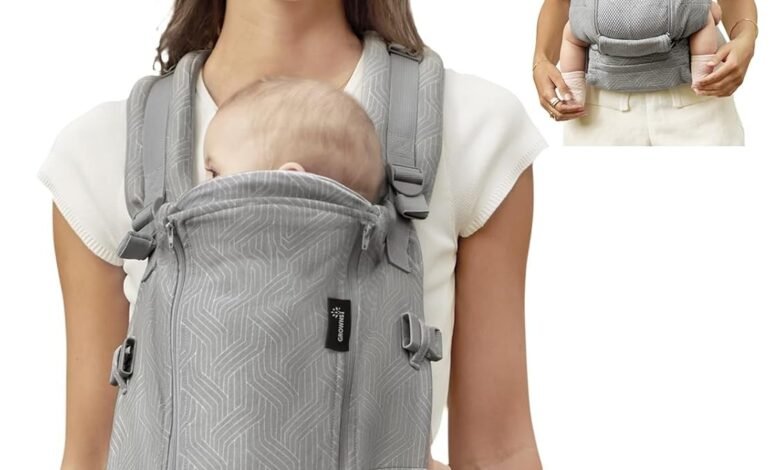
Grownsy has also entered the ergonomic baby carrier market with designs that prioritize both parent comfort and infant safety. Their carriers incorporate many of the key features that back pain sufferers need, including reinforced lumbar support and adjustable straps that accommodate different body types throughout the baby’s growth stages.
How to Choose the Right Baby Carrier
Finding the perfect baby carrier requires evaluating how well it matches your specific body type and daily routine. Start by trying the carrier on with weight similar to your baby’s to assess true comfort levels. The waist belt should rest on your hip bones, not your waist, allowing your skeletal structure rather than back muscles to bear the load. Shoulder straps should lie flat without digging in or sliding off, and you should be able to stand naturally upright without leaning forward or back to counterbalance your baby’s weight.
Weight capacity determines how long you can use a carrier before outgrowing it. Most carriers accommodate newborns through toddlers, but verify both minimum and maximum weight limits match your needs. Parents with back pain benefit from carriers that maintain supportive structure across the entire weight range rather than becoming floppy as babies grow heavier. Consider whether you’ll need infant inserts for newborns, as these add complexity that may affect proper positioning crucial for back support.
Ease of use directly impacts whether you’ll maintain correct positioning that protects your back. Complicated buckles and adjustments often lead to improper fitting when you’re in a hurry. Test how quickly you can put on and remove the carrier independently, and whether you can adjust straps while wearing it. Carriers requiring a second person for adjustments rarely get positioned correctly throughout the day. Look for intuitive designs with clearly marked adjustment points and buckles you can operate one-handed.
Health and safety features extend beyond back support to overall wellbeing. The carrier should position your baby’s hips in the recommended ergonomic “M” shape with knees higher than bottom, preventing hip dysplasia while keeping weight centered against your body. Head and neck support for younger babies ensures safe positioning that doesn’t throw off your balance. Safety certifications and testing standards provide assurance the carrier will perform reliably under stress, preventing sudden failures that could injure your back through sudden weight shifts or emergency catching movements.
Tips for Using a Baby Carrier to Alleviate Back Pain
Proper adjustment transforms even the best carrier from uncomfortable to pain-relieving. Start by loosening all straps completely before putting on the carrier. Position the waist belt on your hip bones, then tighten it firmly enough that it doesn’t slide but doesn’t restrict breathing. Place your baby in the carrier and adjust the body panel so their bottom sits deep in the seat with knees bent upward. Tighten shoulder straps evenly while standing straight, pulling them snug enough that your baby sits high on your chest with their head close enough to kiss. The carrier should feel secure without any bouncing when you walk. Check that weight rests primarily on your hips rather than pulling down on your shoulders, redistributing as needed by tightening the waist belt and loosening shoulder straps slightly.
Taking regular breaks prevents muscle fatigue that amplifies back pain during extended carrying sessions. Remove the carrier every hour to stretch your back, roll your shoulders, and allow compressed muscles to recover. Between wearing sessions, perform gentle stretches targeting your lower back, hip flexors, and shoulders. Cat-cow stretches relieve spinal compression while standing side bends release tension in your obliques and lower back. Doorway stretches open tight chest muscles that develop from carrying weight on your front. These brief movement breaks maintain flexibility and prevent the chronic tightness that develops into persistent pain.
Matching carrier type to your specific activities maximizes comfort throughout different situations. Soft-structured carriers with substantial padding work best for longer outings and parents with existing back issues, providing consistent support during extended wear. Wraps offer customizable positioning ideal for newborns and parents who need weight distributed across their entire torso, though they require practice to achieve proper tension. Ring slings allow quick up-and-down transfers perfect for brief carrying periods, but concentrate weight on one shoulder, making them less suitable for parents with chronic back pain during longer use. Consider owning multiple carrier types to match different needs rather than forcing one carrier to serve every situation inadequately.
Finding Your Perfect Carrier for Pain-Free Bonding
Choosing the right baby carrier can genuinely transform your parenting experience, turning what might be painful carrying sessions into comfortable bonding opportunities. The carriers we’ve explored offer proven solutions through strategic lumbar support, intelligent weight distribution, and thoughtful ergonomic design that protects your spine while keeping your baby secure. Remember that effective lumbar support with wide, padded waist belts, adjustable shoulder straps that distribute pressure evenly, and breathable materials all work together to prevent and alleviate back pain.
Finding your ideal carrier requires trying different styles to discover what works best for your body type and lifestyle. Don’t settle for discomfort—the right carrier should feel supportive from the moment you put it on, allowing you to stand naturally upright without strain. Pay attention to proper adjustment techniques and take regular breaks to maintain your back health. Whether you choose a soft-structured carrier for maximum support or a wrap for customized positioning, prioritizing your comfort ensures you can enjoy precious closeness with your baby without sacrificing your physical wellbeing. Your back will thank you for investing time in finding the perfect carrier match.