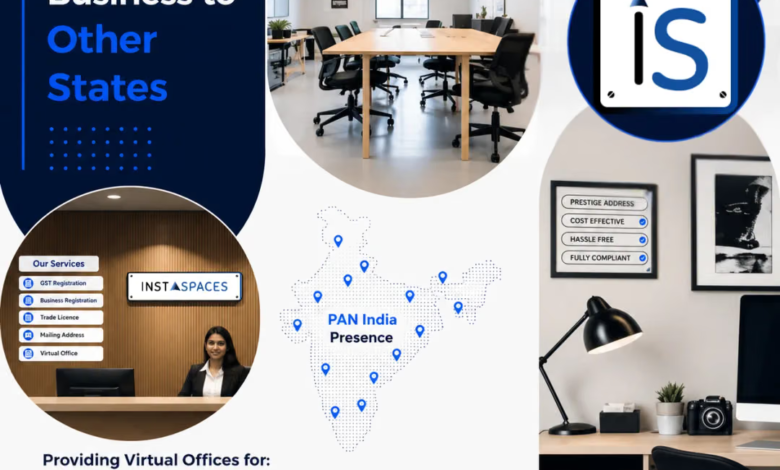
Business growth often requires entrepreneurs to make difficult decisions about infrastructure. A company may acquire customers in new markets long before it needs a permanent office there. Employees may work remotely, while the business still needs a professional address and structured administrative presence.
This has changed the way companies approach expansion.
Instead of immediately committing to commercial premises, businesses can use flexible infrastructure that grows alongside their requirements. For eligible businesses, virtual office services can form part of this approach by providing a professional address while everyday operations remain largely digital.
Expansion Does Not Always Mean Opening an Office
Traditionally, entering a new market meant renting an office and establishing a local team.
That approach can still make sense for businesses that require physical operations. But for digital companies, an office may not be necessary at the beginning of an expansion.
A marketing agency, software company, consultant, or online service provider can serve customers in another market without relocating its entire workforce.
This makes flexible business infrastructure particularly valuable during the early stages of expansion.
Testing a Market Before Making a Major Investment
Expansion involves uncertainty.
A business may identify an opportunity in a new region but have no guarantee that demand will justify a permanent office.
Committing to a long-term lease too early can increase fixed expenses before revenue from the new market becomes predictable.
A more gradual strategy allows businesses to test demand first.
They can focus on acquiring customers, building partnerships, understanding the market, and determining whether a permanent physical presence will eventually be useful.
A Physical Address Can Still Matter
Remote operations do not eliminate every physical business requirement.
Depending on the nature of the company and applicable regulations, a business may need a suitable address for registration, correspondence, documentation, or other legitimate purposes.
A virtual office can provide this physical element while allowing the company’s workforce to remain distributed.
This creates a useful middle ground between having no physical business presence and maintaining a full-time office.
Supporting GST and Business Registration
Expansion can also create new compliance considerations.
Businesses should evaluate their GST position whenever their operations change and determine whether additional registration or other compliance obligations apply.
The requirements depend on the business’s circumstances, activities, and applicable regulations.
For companies considering operations in southern India, a virtual office in Kerala for GST registration and business expansion may be considered where the arrangement is legally appropriate and supported by the required documentation.

The important point is that businesses should choose an address based on genuine requirements rather than treating a virtual office as a shortcut around regulatory obligations.
Keeping Expansion Costs Under Control
One of the biggest advantages of flexible infrastructure is cost control.
A traditional office can require:
- Security deposits
- Monthly rent
- Furniture
- Utilities
- Maintenance
- Internet infrastructure
- Office equipment
These expenses can add up quickly.
For a company still testing a market, avoiding unnecessary fixed costs can provide more room to invest in activities that directly support expansion.
Marketing, recruitment, technology, customer support, and product development may generate greater value during the early stages than unused office space.
Remote Teams Make Expansion Easier
Distributed teams have changed the economics of geographical expansion.
A business can hire employees from different cities without requiring everyone to relocate. Meetings can take place online, documents can be shared through cloud platforms, and projects can be managed remotely.
A virtual office complements this model by providing a physical business component without requiring the entire workforce to operate from the same premises.
This can make expansion more adaptable and less dependent on property decisions.
Building a Consistent Business Identity
As a company enters new markets, maintaining consistent business information becomes increasingly important.
Addresses, registration details, invoices, contracts, and other documents should be properly managed and kept up to date.
A stable business address can help reduce unnecessary changes and provide continuity as the organization grows.
It can also separate the company’s official identity from the personal locations of founders and employees.
When Should a Company Move to a Physical Office?
A virtual office does not mean that a company should avoid physical premises forever.
As the business grows, circumstances may change.
A company may eventually need a dedicated workplace because of:
- A growing local team
- Regular client meetings
- Physical inventory
- Specialized equipment
- Operational requirements
- Collaboration needs
At that point, a traditional office may provide genuine value.
The advantage of starting flexibly is that the company can make this decision based on actual demand instead of committing to premises before the need exists.
Creating a Flexible Expansion Strategy
The most effective expansion strategy is not necessarily the one that creates the largest physical presence.
It is the one that matches infrastructure with actual business requirements.
For remote-first companies, that may mean maintaining digital operations, establishing appropriate registrations, managing a professional address, and investing in physical premises only when the business genuinely requires them.
This approach can preserve capital while giving the company time to understand a new market.
Conclusion
Business expansion no longer has to follow the traditional office-first model.
With remote teams and digital operations becoming increasingly common, businesses can build their presence gradually while keeping infrastructure aligned with real requirements.
A virtual office can provide one component of this flexible model by supporting an appropriate business address while allowing everyday operations to remain location-independent.
For growing companies, the goal is simple: expand where the opportunity exists, maintain the compliance foundation required for the business, and invest in physical infrastructure when the business actually needs it.